Complimentary insured UK delivery
Jewel of London

Earrings and jewellery

Halo vs Solitaire Diamond Studs: Size, Sparkle and Style

Compare halo vs solitaire diamond studs by centre weight, overall dimensions, profile and care before choosing a pair.
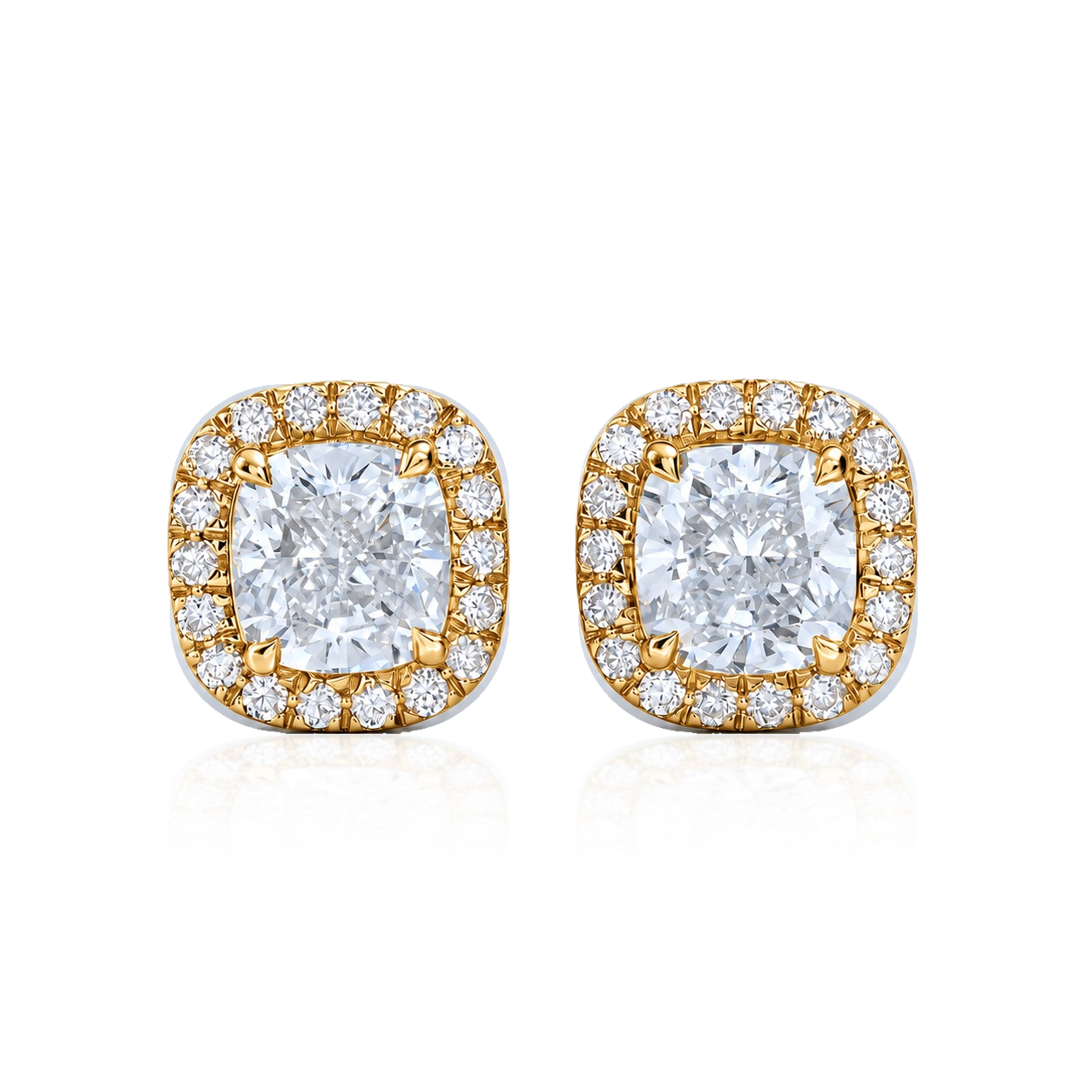
Cushion diamond halo stud earrings in yellow gold

Halo vs solitaire diamond studs is a choice between a clear single-stone outline and a centre framed by smaller diamonds. Both can work for regular wear or special occasions, depending on their scale and setting.

The most useful comparison includes the overall dimensions, centre weight, profile and included backs. A total carat figure alone will not explain the difference.

Halo vs solitaire diamond studs: compare the footprint

A solitaire presents one principal diamond in each earring. A halo adds an outer border, increasing the overall width or length of the setting.

That larger footprint does not mean the centre is larger. A halo with a modest centre may occupy more visible space than a solitaire containing a heavier individual diamond.

Ask for the finished earring dimensions and compare them at realistic scale.

Read the weight breakdown

For equal solitaire studs, a pair total divides approximately between the two stones. Halo descriptions may refer to combined centre weight or the weight of all diamonds.

A fair comparison records both centre and total weights. Otherwise, a halo pair can appear equivalent on paper while using smaller centres surrounded by accents.

Use the earring weight guide to check the arithmetic and product wording.

Decide which pattern you enjoy

A solitaire makes the centre's facet pattern easier to distinguish. A halo introduces several smaller sources of reflection around it.

View examples in ordinary light and at normal distance. Enlarged images can make small halo diamonds look more separate than they appear when worn.

Also consider shape. A round halo and an oval halo can create different proportions, even where the centre weights are similar.

Check depth and support

The front view does not show how far a stud projects or how the basket rests against the ear. Compare side profiles and the arrangement of metal behind the diamonds.

The backs should suit the complete earrings. Ask about support, post compatibility and fastening method. GIA's stud guide discusses the relationship between the front and the fitting.

Comfort should be assessed for the actual pair rather than inferred from style alone.

Allow for care and inspection

A halo contains more small settings, so there are more details to inspect. A solitaire still needs secure claws or a sound bezel and a well-functioning back.

Follow care advice for the whole piece. If a small stone appears loose, a claw catches or a fastening feels unreliable, stop wearing the earring until it is checked.

Store the pair separately from other jewellery to protect both the stones and fittings.

Compare the complete purchase

Confirm diamond origin, metal fineness, pair price and the included backs. Ask what documentation applies to the selected option.

Browse Jewel's earring collection using finished dimensions and the weight breakdown alongside the photograph.

Common questions

Do halos always look larger?

They add an outer border, but the actual comparison depends on both earrings' dimensions.

Are solitaires always more comfortable?

No. Setting depth, weight and backs can matter more than the category.

How should I decide?

Use halo vs solitaire diamond studs to identify the visual effect you enjoy, then confirm the complete pair's fit, specification and care needs.
Related reading

Earrings and jewellery

Butterfly, Screw and Locking Earring Backs: How They Compare

Compare earring backs by mechanism, post compatibility and ease of use, including butterfly, screw and locking fittings.

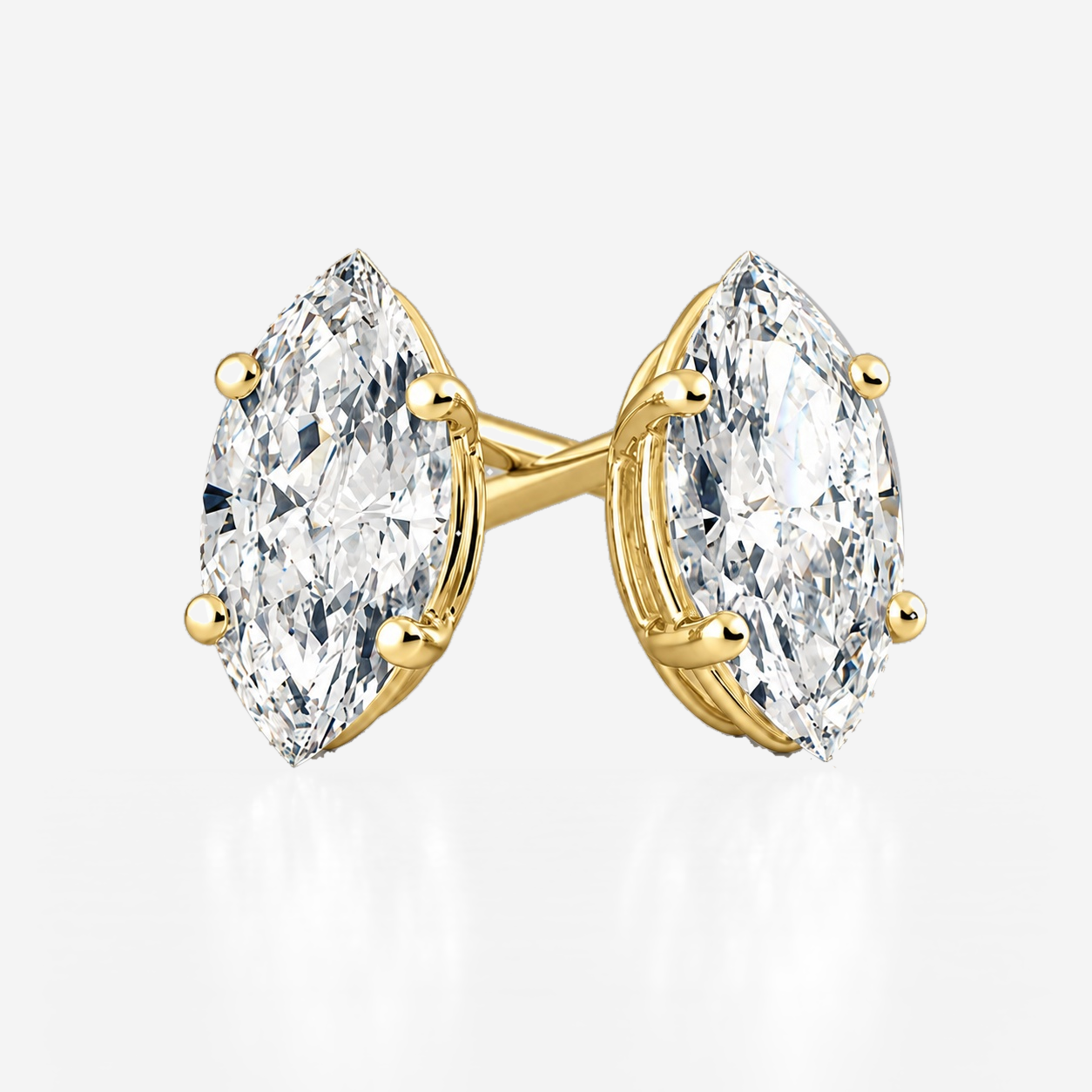
Marquise diamond stud earrings in yellow gold

Earring backs keep a stud in place, but their design also affects support and ease of use. A fastening should suit the post, the earring and the person putting it on.

No mechanism removes the need to check that it is correctly secured and in good condition. Choose a fitting you understand and can operate comfortably.

How common earring backs work

Butterfly or friction backs grip a compatible post through spring tension. Screw backs use a threaded post and back. Locking designs use a specific release and retention mechanism, which varies by manufacturer.

These are different systems, not interchangeable parts. A back that appears to fit over a post may still be unsuitable.

GIA's bench explanation shows why friction-back tension and post engagement matter. Adjustment should be handled professionally rather than improvised at home.

Check compatibility first

Ask which backs are included with the selected earrings. Confirm whether a proposed replacement or upgrade fits the exact posts.

Do not force a threaded back onto an incompatible post or use an oversized friction back simply because it slides on. The fastening needs the intended dimensions and mechanism to work correctly.

If one back is lost, bring the remaining earring or clear product details to the jeweller when arranging a replacement.

Consider support as well as retention

A back helps determine how a stud sits against the ear. Larger or more projecting earrings may need a different support arrangement from small, low-profile studs.

However, bigger is not automatically better. The complete fit should feel comfortable without pressing excessively. Assess the earring from the side as well as the front.

If a stud tilts, ask whether the setting depth, post position and back are working together appropriately.

Choose a mechanism you can handle

A screw fitting can take longer to put on and remove. A locking fitting may require a specific finger movement. A butterfly can be straightforward, but must engage firmly with a suitable post.

Practise the intended method carefully over a secure surface. Ask for a demonstration if the fastening is unfamiliar. Ease of handling matters because a theoretically secure mechanism is less useful if it is regularly left only partly engaged.

Recognise when inspection is needed

Stop wearing the earring if the back feels loose, the mechanism stops working normally or the post appears bent. Do not compensate by squeezing parts with household tools.

Clean according to the jewellery's materials and construction, keeping residue away from working parts where appropriate. Ask the jeweller for specific maintenance advice.

Explore Jewel's earrings and confirm the included fittings for the exact pair.

Common questions

Are screw backs always the best choice?

They can suit some wearers, but comfort, compatibility and ease of use matter. There is no universal best mechanism.

Can I swap backs between earrings?

Only after confirming compatibility. Similar-looking posts can differ.

Can a secure back guarantee against loss?

No fitting offers a blanket guarantee. Well-matched earring backs, correct use and inspection work together to reduce avoidable problems.

Related reading

Earrings and jewellery

Comparing Diamond Stud Weights: A Worked Buying Guide

Make comparing diamond stud weights clearer with worked examples for equal pairs, solitaire centres and halo totals.

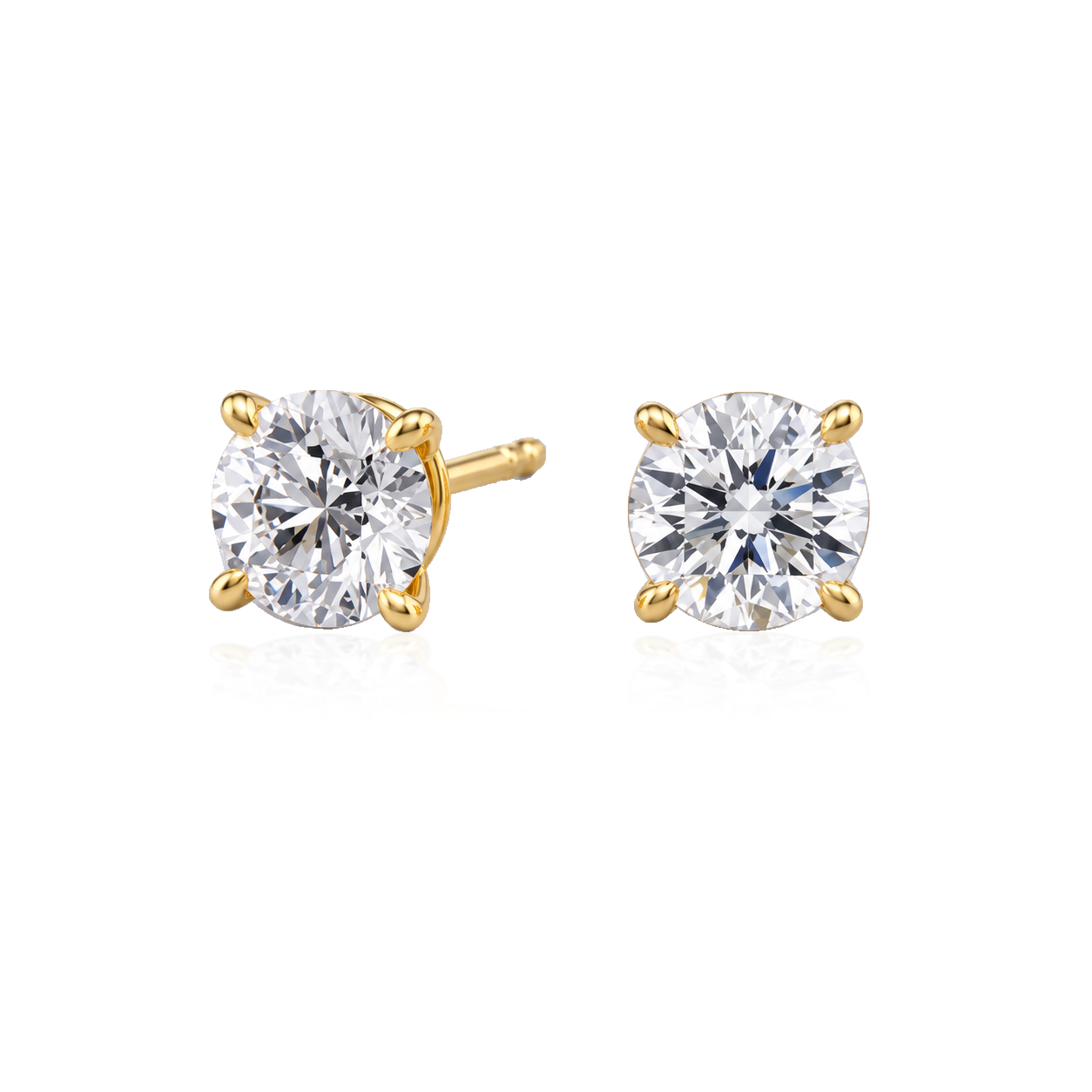
Pair of round diamond solitaire stud earrings in yellow gold

Comparing diamond stud weights starts with identifying what each number includes. A pair total, a per-earring weight and the combined centres of a halo pair describe different things. Put every quote on the same basis before comparing prices.

For a matched solitaire pair, divide the combined diamond weight by two to understand the approximate weight in each earring. Then use measurements to assess visible size.

A checklist for comparing diamond stud weights

The following examples show the arithmetic for two equal single-stone earrings. Actual individual weights may vary slightly within the stated product specification.

Pair total Approximate weight per earring
0.50 ct 0.25 ct
1.00 ct 0.50 ct
1.50 ct 0.75 ct
2.00 ct 1.00 ct
3.00 ct 1.50 ct
4.00 ct 2.00 ct

A 2.00 ct total pair therefore does not mean two 2.00 ct diamonds. That second arrangement would total approximately 4.00 ct.

These are explanatory examples, not a statement that every option is currently offered.

Treat halo weights separately

Halo studs contain centre stones and surrounding accents. If an option is labelled “combined centre weight”, the halo diamonds are additional to that figure.

For example, a hypothetical pair with two 0.50 ct centres and 0.20 ct of halo diamonds across both earrings totals 1.20 ct. The centres still total 1.00 ct.

Ask for the breakdown rather than dividing the finished halo total by two and assuming the answer is the centre size.

Carat does not give an exact diameter

A diamond's weight does not dictate one fixed millimetre measurement. Shape and proportions affect its outline. The mounting adds another dimension around and behind the stone.

GIA explains carat weight as a quality factor distinct from visible size. Compare the actual diamond and overall earring dimensions when deciding how prominent a pair will look.

An oval and a round of similar weight will not create identical silhouettes.

Check what the image represents

A listing may use the same render across several weight choices. That image can show design and metal, but may not demonstrate each option at true scale.

Ask which size appears in an on-ear photograph. If that information is unavailable, rely more heavily on the written dimensions and a realistic comparison with earrings you already own.

Compare prices fairly

Keep diamond origin, metal, setting style and included backs consistent. A halo pair and a solitaire pair can have similar total weights while allocating those weights differently.

Record whether the price covers both earrings. Also check what documentation accompanies the selected stones rather than assuming every option has identical paperwork.

Browse Jewel's earring collection and read the selected option's wording before adding it to your shortlist.

A practical comparison

Imagine one quote states “1.00 ct pair” for equal solitaire studs and another states “0.50 ct each”. These describe the same diamond weight: two 0.50 ct stones. Now imagine a halo pair advertised with 1.00 ct total across all stones. Its main diamonds may be smaller because the halo contributes to the total. Ask for the centre and surrounding weights separately, then compare the overall dimensions, origin, metal and fittings.

Common questions

What does 1 ct mean for a pair?

If clearly labelled as the total for equal solitaire studs, it means approximately 0.50 ct per earring.

Is centre weight the same as total weight for halos?

No. Total weight includes the accents when the label says it covers all diamonds.

What should I ask if the wording is unclear?

Request the weight per centre, combined centre weight and finished pair total. Diamond stud carat sizes become straightforward once the grouping is explicit.

Related reading

Earrings and jewellery

How to Choose Diamond Stud Earrings for Everyday Wear

Choose diamond stud earrings by comparing pair weight, stone matching, settings and backs for comfortable everyday wear.

Round diamond stud earrings in yellow gold

Diamond stud earrings need to work as a pair and feel comfortable on the ear. The right choice balances visible size, setting depth, secure backs and the appearance of the two diamonds together.

Start with the kind of presence you want. A small pair can provide a quiet detail, while larger studs create more noticeable coverage. Neither can be judged accurately from a close-up photograph alone.

Compare diamond stud earrings by pair and per-ear weight

Check whether the carat figure describes the pair or each earring. A 1.00 ct total pair of equal solitaire studs contains approximately 0.50 ct per earring.

For halos, establish whether the advertised option describes the two centres or all diamonds combined. Read the earring carat guide before comparing prices.

Measurements in millimetres help explain how the selected pair will look. The overall setting may be wider than the diamond itself.

Assess how well the stones match

The two diamonds should look harmonious together. Compare dimensions, outline, colour appearance and light pattern, not only the laboratory grades.

A small difference on paper may be less noticeable than a mismatch in visible size or pattern. Ask how the pair has been selected and what documents apply to the stones.

GIA's stud-earring guide discusses matching and the role of settings and backs. Use those questions to assess the complete pair.

Choose a setting that sits well

Basket depth affects how far a stud projects. The shape and placement of metal behind the diamond can influence how it rests against the ear.

Look at front and side views. A pair that appears delicate from the front can have a more substantial profile. Larger earrings also need an appropriate back to support their position.

Comfort is personal, so avoid assuming one setting style will suit every earlobe.

Understand the fastening

Butterfly, screw and locking backs work differently. Ask which is included, whether it matches the post and how to secure it correctly.

A fitting should not be forced. If the back feels loose, catches poorly or no longer operates as intended, stop wearing the earring and arrange inspection.

The ability to handle the fastening easily is part of the purchase decision, especially for earrings worn frequently.

Compare the complete specification

Record diamond origin, individual or combined weights, metal fineness and included backs. Check whether the price is for a pair.

Do not assume every small stone has an individual report. Ask what documentation accompanies your selected option. Also review the applicable returns terms before ordering.

Browse Jewel's earrings with both comfort and appearance in mind.

Common questions

Is a larger pair always better for everyday wear?

No. Visible size, weight, profile and support all affect suitability.

Can I judge size from an on-ear image?

It helps, but confirm which option is shown and compare measurements. Ear size and camera framing vary.

What is the best final check?

Choose diamond stud earrings as a complete pair: matched stones, a comfortable setting and backs you can use securely.

Related reading

Sizing and wedding rings

Eternity Ring vs Wedding Ring: Meaning and When to Wear Each

Understand eternity ring vs wedding ring differences, how diamond bands serve either role and how to wear them together.

Yellow gold half eternity ring with round diamonds

Eternity ring vs wedding ring describes different roles more than a strict division of designs. A wedding ring marks a marriage. An eternity ring is often chosen to mark enduring commitment or a significant occasion.

The same diamond-band style can serve either purpose. What makes it your wedding or eternity ring is the meaning you give it and when you choose to wear it.

Eternity ring vs wedding ring: where designs overlap

A wedding band can be plain, textured or diamond-set. An eternity design typically uses a sequence of stones around part or all of the band.

A full eternity continues the settings around the circle; a half eternity leaves a plain section. Either might be chosen as a wedding ring or as a later gift.

There is no need to buy a particular construction simply because an occasion has a traditional name.

Choose the occasion that matters to you

Some couples choose an eternity ring for an anniversary or another personal milestone. Others select a diamond band at the wedding itself.

You do not need to wait for a prescribed year or event. The useful consideration is whether the piece fits the wearer's preferences and will be enjoyed regularly.

If it is a surprise, discreetly establish size and style rather than assuming a current ring gives all the required information.

Plan how the rings will be worn

An eternity ring might sit beside an engagement ring and wedding band, replace one on some days, or be worn on another finger.

Try the intended arrangement. Three rings can occupy substantially more space than one, and the combined width may change the fit. Do not assume each ring's existing size will feel comfortable in a full stack.

The ring-size guide explains why width and profile matter.

Inspect contact between settings

Diamond-set rings can introduce exposed edges and raised metalwork. Ask a jeweller to check where the rings meet, particularly if the heights differ.

A pleasing photograph does not establish a safe relationship during movement. Consider profile views and how the rings shift independently.

GIA's jewellery-care guidance emphasises protecting pieces from damage. For a stack, that includes treating the combination as carefully as each ring.

Compare practical options

Half coverage may provide a different feel and more potential sizing flexibility than full coverage, although the actual design must be assessed. A plain wedding band offers another balance of surface, care and visual simplicity.

If you intend to wear a ring alone often, judge it independently. A deeply shaped band may look different without its companion, while a straight eternity band can create a clear standalone line.

Explore the wedding and eternity collection using your intended wearing arrangement.

Common questions

Can an eternity ring be a wedding ring?

Yes. A diamond-set eternity style can be chosen for that role.

Is there a compulsory finger or order?

Customs vary, and comfort matters. Choose an arrangement meaningful to you and suitable for the rings.

Do I need both?

No. The eternity ring vs wedding ring distinction helps explain choices; it does not create a requirement to own multiple pieces.

Related reading

Sizing and wedding rings

Half Eternity vs Full Eternity Rings: Comfort, Care and Resizing

Compare half eternity vs full eternity rings for diamond coverage, comfort, sizing and maintenance before choosing.

Yellow gold half eternity ring with round diamonds

Half eternity vs full eternity is a comparison of how far the stones continue around the band. A half eternity has a stone-set section and a plain section. A full eternity continues the stone setting around the complete circle.

That difference affects more than appearance. It can influence sizing flexibility, contact with nearby fingers and how the ring feels during daily activities.

Half eternity vs full eternity: compare coverage

A half eternity presents its diamonds mainly across the visible upper section when correctly positioned. If the ring rotates, some plain metal may become visible.

A full eternity maintains a stone-set appearance around the circumference. However, the underside also carries settings, which may feel different during gripping or against other fingers.

The exact extent of a “half” design can vary. Check the actual stone coverage rather than treating the name as a precise measurement.

Judge comfort through the setting

Stone size, band height and setting type all matter. A low channel arrangement and a raised claw arrangement can feel different at the same width.

Try the ring with fingers resting together. If it will sit beside another ring, check the pair as well. Exposed diamond edges or settings should not press awkwardly against neighbouring jewellery.

Confirm sizing before ordering

A continuous circle of stones often limits resizing options. GIA's sizing guidance notes the difficulty that full stone coverage can create.

A half eternity may offer more scope because of its plain section, but no alteration should be guaranteed without assessment. Metal, design and the amount of change still matter.

Measure using the intended width and profile rather than relying on a different ring's size.

Compare weights and prices fairly

A full eternity may contain more stones, but the total depends on band size, diamond dimensions and construction. Two rings with the same stated total can distribute that weight differently.

Ask for band width, coverage, selected ring size and total diamond weight. Where relevant, clarify whether the displayed weight is approximate and whether it varies across sizes.

Compare the final selected specification, not only a generic starting price.

Plan everyday care

Both styles require inspection of the settings and gentle cleaning suited to the whole piece. Remove the ring for heavy gripping and impact-prone tasks.

With full coverage, remember that the underside contains stones too. Avoid judging condition only from the top. Arrange inspection after an impact or if anything catches, shifts or feels rough.

The care guide provides general principles for regular maintenance.

Common questions

Is full eternity always more comfortable because it looks the same when it turns?

Visual consistency and physical comfort are different questions. Assess the setting on your hand.

Can every half eternity be resized?

No. The plain section may help, but the exact construction needs assessment.

Which should I choose?

Use the half eternity vs full eternity comparison to balance coverage, fit and future flexibility. Explore Jewel's wedding and eternity collection with those priorities recorded.

Related reading

Sizing and wedding rings

Wedding Band Profiles: Court, D-Shape and Flat Designs

Compare wedding band profiles, including court, D-shape and flat designs, and understand how interior shape affects comfort.

D-shape wedding band in yellow gold

Wedding band profiles describe the ring's cross-section. They explain the shape you would see if you looked through a slice of the band, including the outside surface and the surface against the finger.

This is why two plain bands with the same width can feel different. Profile and depth influence contact, appearance and the way the ring passes over the knuckle.

Compare the common wedding band profiles

A court profile generally has a rounded outside and inside. A D-shape usually has a rounded outside with a flatter inner surface. A flat profile has a flatter outer face, although its interior may be flat or rounded depending on the design.

Product names are not perfectly consistent between sellers. Ask for a cross-section or a clear description of both surfaces rather than relying only on the label.

A “comfort-fit” description commonly relates to the inside shape, but it should still be assessed on your hand.

Look at the outer surface

A rounded top creates a softer highlight and curved silhouette. A flat top gives a different visual line and may feel more geometric. Edge treatment can soften or sharpen that impression.

Finish also matters. A polished flat band and a brushed flat band can look quite different, even with the same dimensions. Compare profile and finish separately so you know which feature you prefer.

Pay attention to the inner surface

The inside profile affects how the band contacts the finger and moves over the knuckle. However, a rounded interior is not an automatic guarantee of comfort for every wearer.

Try an appropriate sample and check the fit over ordinary hand movements. GIA's ring-sizing resource explains why measurement needs to account for construction.

A familiar letter size may not feel identical in a different profile.

Compare depth as well as width

A deep band can feel substantial even when it is relatively narrow. A low-profile band may sit differently between neighbouring fingers.

Ask for dimensions and, where possible, compare designs with similar width. That makes it easier to identify whether your preference comes from profile, depth or the amount of visible metal.

Avoid judging weight from an enlarged image. The metal and complete cross-section both contribute.

Check the bridal pairing

When worn beside an engagement ring, the wedding band's outer shape and height affect clearance. A rounded surface may meet a setting differently from a flat one.

Review the pair in profile. The aim is comfortable spacing and a look you enjoy, rather than matching a product name.

Browse the wedding collection and keep the ring-size guidance alongside the design comparison.

Common questions

Is court the same as comfort fit?

They can be related descriptions, but naming varies. Confirm the inside and outside shape of the specific band.

Does flat mean sharp edges?

No. A flat outer face can have softened edges. Inspect the actual design.

Which profile is best?

There is no universal winner among wedding band profiles. Compare the cross-section, depth and fit on your hand, then choose the appearance and feel you prefer.

Related reading

Sizing and wedding rings

Wedding Band Widths: How to Choose a Comfortable Fit

Choose a wedding band width by comparing appearance, finger coverage, profile and fit across different ring designs.

Yellow gold full court wedding band

Wedding band width changes how a ring looks and feels. A narrow band may appear quiet and fine, while a broader band has more presence across the finger. Neither is restricted to a particular gender or hand type.

Start with a few widths you like, then compare them in the intended profile and metal. A width number alone does not describe the complete wearing experience.

Understand wedding band width and depth

Width runs across the band from edge to edge. Depth or thickness describes its cross-section from the inside towards the outer surface.

Two bands of equal width can differ in depth, weight and feel. A high rounded profile can seem more substantial than a flatter one, even if the top-view measurement matches.

Request both dimensions where available, and ask whether the band has a consistent section around the ring.

Compare widths at realistic scale

A close-up product image can make a fine band look broad. Use a ruler, suitable samples or a measured existing ring to understand the difference.

As an illustration, a 2 mm band and a 5 mm band occupy noticeably different amounts of finger space. Those numbers are comparison examples, not recommendations for every wearer.

View the ring with your normal hand position. A comfortable design should work when fingers rest together, not only in a posed photograph.

Measure for the chosen style

A wider band can feel different from a narrow gauge. Interior rounding also affects how it passes over the knuckle and sits at the base.

GIA's sizing guidance highlights the importance of the intended ring. Confirm fit with an appropriate sample instead of automatically reusing a size from a much narrower ring.

Do not apply a universal rule to add half a size. Measure the actual requirement.

Consider the engagement ring and future stack

If the band sits beside an engagement ring, evaluate their combined width. Two rings together can feel more substantial than either individually.

A broader wedding band may balance a large centre or deliberately contrast with a fine shank. A narrow band may preserve more visual space around the engagement ring. Look at the pair and check profile clearance as well as style.

Connect width to construction

A diamond-set band needs a suitable arrangement of metal and stones. A plain band can use different profiles and finishes. Neither should be judged by width alone.

Ask how the chosen dimensions affect resizing, engraving and maintenance. Those possibilities depend on the actual ring, rather than a generic category.

Explore Jewel's wedding bands with width, depth and profile recorded together.

Common questions

Is a wider band stronger?

Width can contribute, but alloy, depth, construction and wear conditions also matter.

Can a narrow band be comfortable?

Yes, provided its fit, edges and profile suit the wearer. Narrow does not automatically mean either comfortable or uncomfortable.

Which width should I choose?

Choose wedding band width by trying a realistic comparison, then confirm the size and profile for that exact design. Your comfort and preference are the deciding factors.

Related reading

Sizing and wedding rings

Curved Wedding Bands: Contoured and Wishbone Designs Explained

Compare curved wedding bands, contoured designs and wishbones by shape, depth and clearance beside an engagement ring.

Wishbone diamond wedding band in yellow gold

Curved wedding bands create space around an engagement ring rather than maintaining a straight line across the finger. Some use a gentle arc, while others have a deeper contour or a pointed wishbone shape.

Their purpose can be practical, decorative or both. The right design needs to suit the actual engagement ring, not only resemble its outline in a photograph.

Compare curved wedding bands by the shape of the gap

A gentle curve may follow a rounded basket. A more detailed contour may accommodate a particular setting. A wishbone creates an angled opening and a distinctive point.

Look at the contour's depth and width. Two bands described as curved can provide very different amounts of space. A curve that is too shallow may still touch the setting; one that is much deeper can leave a gap you did not expect.

Match the engagement ring's profile

The centre diamond's outline is only part of the problem. The basket, claws and any hidden accent stones also occupy space.

Ask for the rings together from above and from the side. A match at the top can conceal contact lower down. The actual dimensions of both rings matter.

GIA's ring-setting terminology helps distinguish the stone-holding structure from the decorative outline you see first.

Consider how the rings move

A bridal pair will not remain perfectly aligned at every moment. Check whether the shaped band can move comfortably without pushing against a claw or exposing a vulnerable point to pressure.

Finger fit matters too. A ring that rotates excessively may change the relationship between the two designs. Resolve size and profile compatibility together rather than using a deep contour to conceal an unsuitable fit.

Choose plain metal or diamonds deliberately

A plain shaped band makes the outline clear. Diamond-set versions add texture and reflections, but their settings introduce further contact and maintenance considerations.

Compare the band width and height, not only the total diamond weight. A fine pavé line and a broader channel design can behave differently beside the same engagement ring.

See the wedding collection for the available construction and metal options.

View the band on its own

A curved band may be worn without the engagement ring during travel, work or other activities. Decide whether you enjoy that independent silhouette.

A wishbone can create a striking single-ring shape. A deeply fitted contour may feel more specific to its partner. Neither is wrong, but it is worth considering before ordering.

Common questions

Does a pear ring always need a wishbone band?

No. The actual mounting and desired fit determine the best pairing.

Can one curved band fit several engagement rings?

It may, but each pairing should be checked. Similar centre shapes do not guarantee similar baskets.

How do I choose the correct curve?

Compare curved wedding bands using the depth, width and profile of the space they create. Then verify comfort and contact points with the intended engagement ring.

Related reading

Sizing and wedding rings

What Is a Flush-Fit Wedding Band, and Will You Need One?

Understand a flush-fit wedding band and the checks needed for a close pairing, including basket clearance and band height.

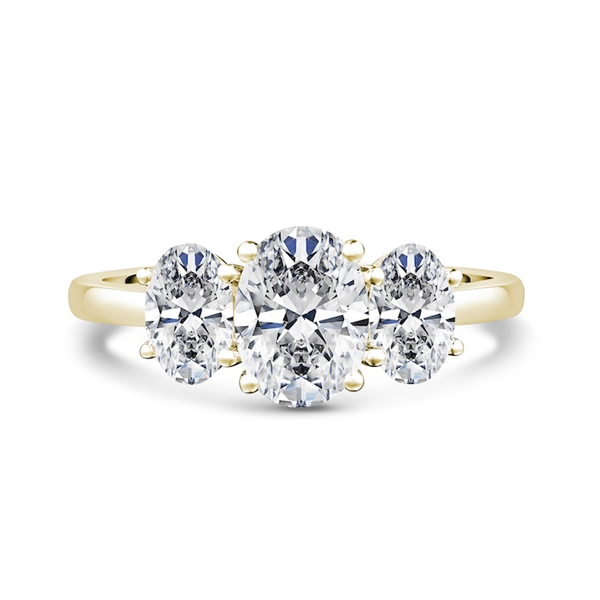
Oval trilogy engagement ring in yellow gold

A flush-fit wedding band sits closely beside the engagement ring in the intended pairing. The phrase describes the relationship between two rings, rather than guaranteeing that one band will fit every setting.

A comfortable close fit requires enough clearance around the engagement ring's structure. It should not depend on forcing the rings together.

What a flush-fit wedding band needs

The engagement ring's basket and bridge must leave suitable space for the band. The band's width, height and profile must fit that space.

A straight band may work beneath an elevated setting. A low or wide basket may require another approach. GIA's explanation of setting styles can help identify the parts to discuss with a jeweller.

The important evidence is a view of the actual pairing, especially from the side.

Do not judge from the centre's height alone

A high centre can still have a low bridge or decorative element that obstructs the band. A hidden halo may occupy space that appears open in a top view.

Ask where the neighbouring ring will sit. If the proposed band touches small diamonds or their settings, have that contact assessed rather than assuming it is harmless.

The rings can move independently during wear, so the fit needs to work beyond one carefully arranged photograph.

Compare straight and shaped options

A straight band creates a clean line when clearance allows. A curved band can follow a rounded basket. A contoured or wishbone band can provide room around a more projecting outline.

These names cover many shapes. A curve made for one ring may leave the wrong gap around another. Compare the depth and position of the contour, not just the product label.

Browse the wedding selection using the engagement ring's dimensions as a reference.

Decide whether flush fit is your priority

A small gap can look intentional and allow each ring's shape to remain distinct. You do not need to replace a comfortable pairing simply because it is not completely flush.

If you plan to wear the wedding band alone often, consider whether a strong contour still appeals without its companion. The best choice balances the pair and each ring's independent use.

Review fit on the finger

Two rings together occupy more space than one. Check comfort with both in position, especially if the wedding band is broad.

Do not compensate for poor clearance by choosing an unsuitable finger size. Ring size and profile compatibility are separate issues that should each be resolved.

The ring-size guide explains the fitting considerations.

Common questions

Is flush-fit the same as flush-set?

No. Flush-fit describes how rings sit together. Flush-set usually describes a stone set into the metal surface.

Can a curved band guarantee a perfect fit?

No. Its contour must match the actual engagement ring.

Do I need one?

Choose a flush-fit wedding band if a close pairing is important to you and the two designs work comfortably together. A deliberate gap is also a valid choice.

Related reading

Your bag

Enjoy 10% off
Join our newsletter and enjoy 10% off full-price jewellery.
    Get my 10% code
    Email me new collections and offers.
    Unsubscribe anytime. Privacy
    No thanks, I’ll keep browsing