
Sizing and wedding rings
Wedding Band Widths: How to Choose a Comfortable Fit
Choose a wedding band width by comparing appearance, finger coverage, profile and fit across different ring designs.
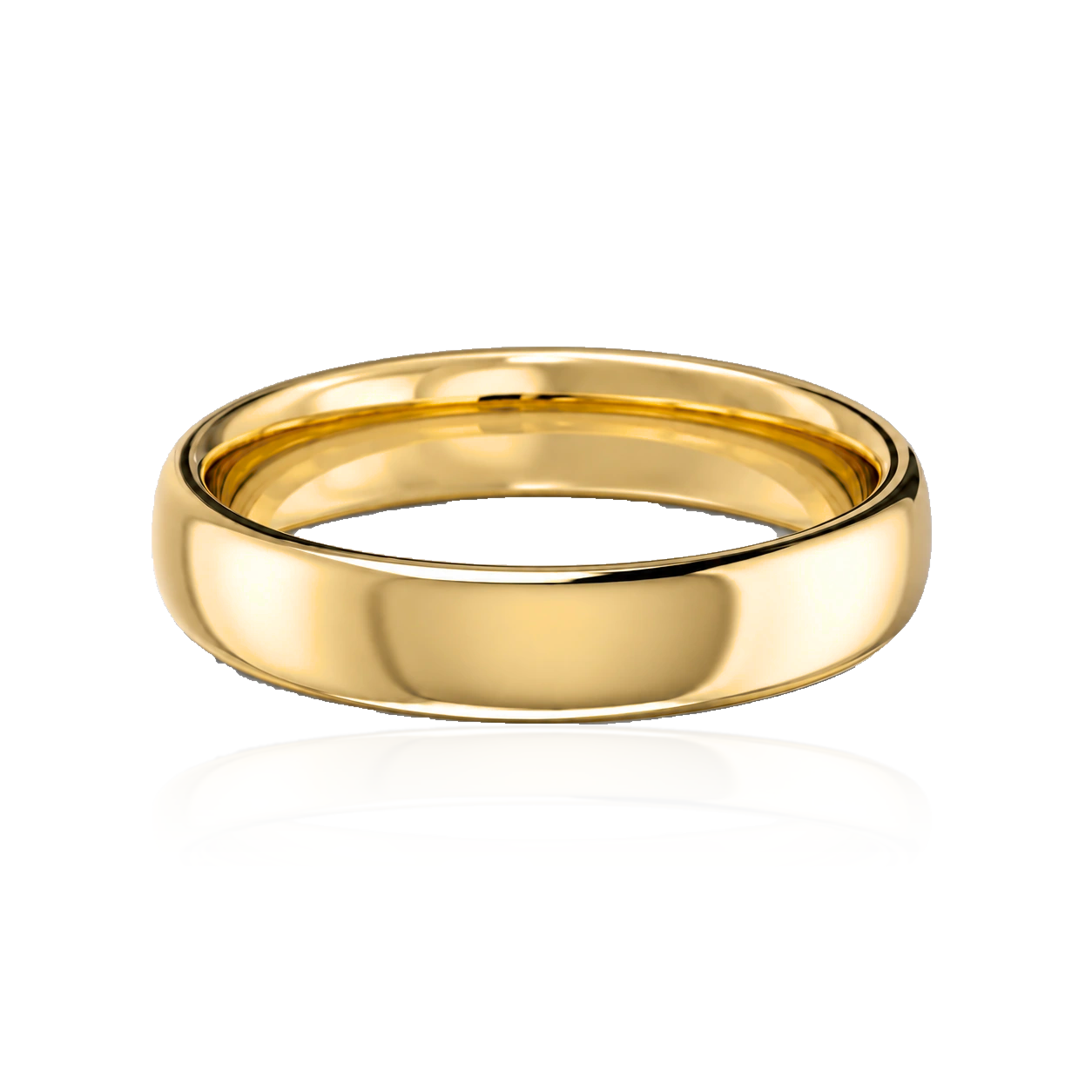
Wedding band width changes how a ring looks and feels. A narrow band may appear quiet and fine, while a broader band has more presence across the finger. Neither is restricted to a particular gender or hand type.
Start with a few widths you like, then compare them in the intended profile and metal. A width number alone does not describe the complete wearing experience.
Understand wedding band width and depth
Width runs across the band from edge to edge. Depth or thickness describes its cross-section from the inside towards the outer surface.
Two bands of equal width can differ in depth, weight and feel. A high rounded profile can seem more substantial than a flatter one, even if the top-view measurement matches.
Request both dimensions where available, and ask whether the band has a consistent section around the ring.
Compare widths at realistic scale
A close-up product image can make a fine band look broad. Use a ruler, suitable samples or a measured existing ring to understand the difference.
As an illustration, a 2 mm band and a 5 mm band occupy noticeably different amounts of finger space. Those numbers are comparison examples, not recommendations for every wearer.
View the ring with your normal hand position. A comfortable design should work when fingers rest together, not only in a posed photograph.
Measure for the chosen style
A wider band can feel different from a narrow gauge. Interior rounding also affects how it passes over the knuckle and sits at the base.
GIA's sizing guidance highlights the importance of the intended ring. Confirm fit with an appropriate sample instead of automatically reusing a size from a much narrower ring.
Do not apply a universal rule to add half a size. Measure the actual requirement.
Consider the engagement ring and future stack
If the band sits beside an engagement ring, evaluate their combined width. Two rings together can feel more substantial than either individually.
A broader wedding band may balance a large centre or deliberately contrast with a fine shank. A narrow band may preserve more visual space around the engagement ring. Look at the pair and check profile clearance as well as style.
Connect width to construction
A diamond-set band needs a suitable arrangement of metal and stones. A plain band can use different profiles and finishes. Neither should be judged by width alone.
Ask how the chosen dimensions affect resizing, engraving and maintenance. Those possibilities depend on the actual ring, rather than a generic category.
Explore Jewel's wedding bands with width, depth and profile recorded together.
Common questions
Is a wider band stronger?
Width can contribute, but alloy, depth, construction and wear conditions also matter.
Can a narrow band be comfortable?
Yes, provided its fit, edges and profile suit the wearer. Narrow does not automatically mean either comfortable or uncomfortable.
Which width should I choose?
Choose wedding band width by trying a realistic comparison, then confirm the size and profile for that exact design. Your comfort and preference are the deciding factors.