
Earrings and jewellery
Comparing Diamond Stud Weights: A Worked Buying Guide
Make comparing diamond stud weights clearer with worked examples for equal pairs, solitaire centres and halo totals.
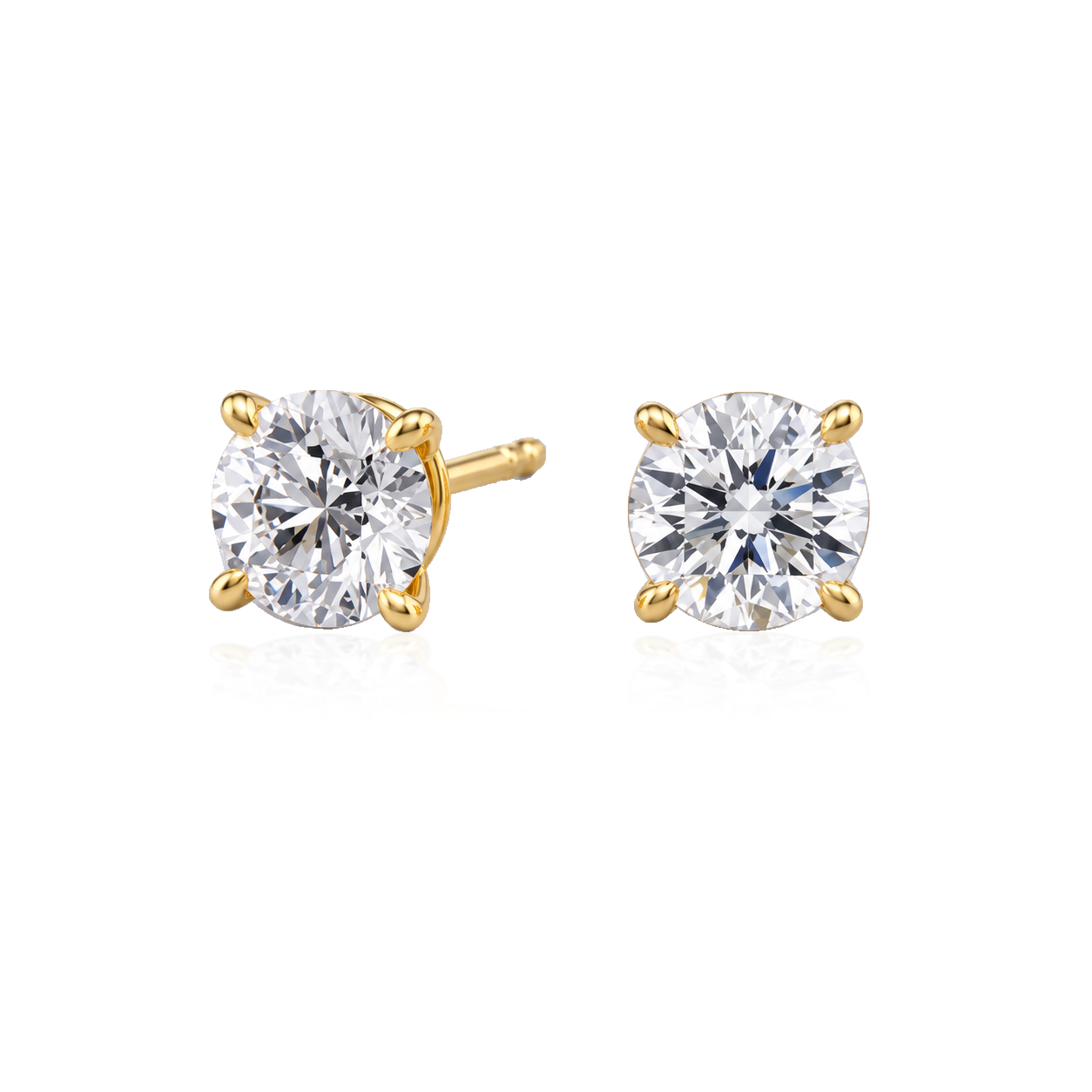
Comparing diamond stud weights starts with identifying what each number includes. A pair total, a per-earring weight and the combined centres of a halo pair describe different things. Put every quote on the same basis before comparing prices.
For a matched solitaire pair, divide the combined diamond weight by two to understand the approximate weight in each earring. Then use measurements to assess visible size.
A checklist for comparing diamond stud weights
The following examples show the arithmetic for two equal single-stone earrings. Actual individual weights may vary slightly within the stated product specification.
| Pair total | Approximate weight per earring |
|---|---|
| 0.50 ct | 0.25 ct |
| 1.00 ct | 0.50 ct |
| 1.50 ct | 0.75 ct |
| 2.00 ct | 1.00 ct |
| 3.00 ct | 1.50 ct |
| 4.00 ct | 2.00 ct |
A 2.00 ct total pair therefore does not mean two 2.00 ct diamonds. That second arrangement would total approximately 4.00 ct.
These are explanatory examples, not a statement that every option is currently offered.
Treat halo weights separately
Halo studs contain centre stones and surrounding accents. If an option is labelled “combined centre weight”, the halo diamonds are additional to that figure.
For example, a hypothetical pair with two 0.50 ct centres and 0.20 ct of halo diamonds across both earrings totals 1.20 ct. The centres still total 1.00 ct.
Ask for the breakdown rather than dividing the finished halo total by two and assuming the answer is the centre size.
Carat does not give an exact diameter
A diamond's weight does not dictate one fixed millimetre measurement. Shape and proportions affect its outline. The mounting adds another dimension around and behind the stone.
GIA explains carat weight as a quality factor distinct from visible size. Compare the actual diamond and overall earring dimensions when deciding how prominent a pair will look.
An oval and a round of similar weight will not create identical silhouettes.
Check what the image represents
A listing may use the same render across several weight choices. That image can show design and metal, but may not demonstrate each option at true scale.
Ask which size appears in an on-ear photograph. If that information is unavailable, rely more heavily on the written dimensions and a realistic comparison with earrings you already own.
Compare prices fairly
Keep diamond origin, metal, setting style and included backs consistent. A halo pair and a solitaire pair can have similar total weights while allocating those weights differently.
Record whether the price covers both earrings. Also check what documentation accompanies the selected stones rather than assuming every option has identical paperwork.
Browse Jewel's earring collection and read the selected option's wording before adding it to your shortlist.
A practical comparison
Imagine one quote states “1.00 ct pair” for equal solitaire studs and another states “0.50 ct each”. These describe the same diamond weight: two 0.50 ct stones. Now imagine a halo pair advertised with 1.00 ct total across all stones. Its main diamonds may be smaller because the halo contributes to the total. Ask for the centre and surrounding weights separately, then compare the overall dimensions, origin, metal and fittings.
Common questions
What does 1 ct mean for a pair?
If clearly labelled as the total for equal solitaire studs, it means approximately 0.50 ct per earring.
Is centre weight the same as total weight for halos?
No. Total weight includes the accents when the label says it covers all diamonds.
What should I ask if the wording is unclear?
Request the weight per centre, combined centre weight and finished pair total. Diamond stud carat sizes become straightforward once the grouping is explicit.