
Sizing and wedding rings
What Is a Flush-Fit Wedding Band, and Will You Need One?
Understand a flush-fit wedding band and the checks needed for a close pairing, including basket clearance and band height.
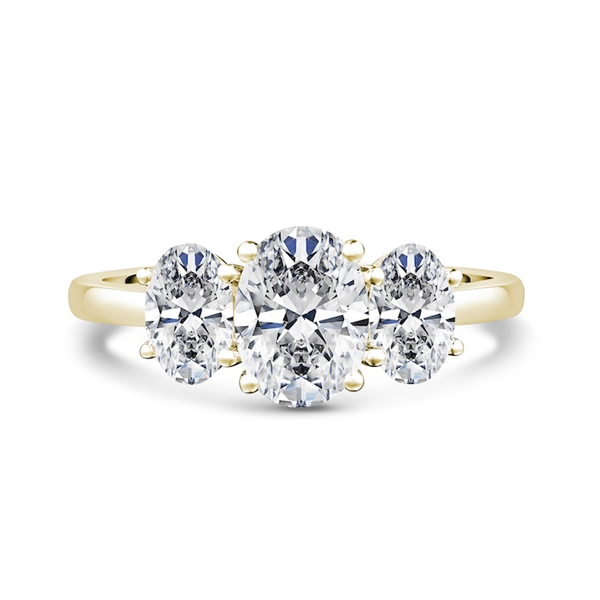
A flush-fit wedding band sits closely beside the engagement ring in the intended pairing. The phrase describes the relationship between two rings, rather than guaranteeing that one band will fit every setting.
A comfortable close fit requires enough clearance around the engagement ring's structure. It should not depend on forcing the rings together.
What a flush-fit wedding band needs
The engagement ring's basket and bridge must leave suitable space for the band. The band's width, height and profile must fit that space.
A straight band may work beneath an elevated setting. A low or wide basket may require another approach. GIA's explanation of setting styles can help identify the parts to discuss with a jeweller.
The important evidence is a view of the actual pairing, especially from the side.
Do not judge from the centre's height alone
A high centre can still have a low bridge or decorative element that obstructs the band. A hidden halo may occupy space that appears open in a top view.
Ask where the neighbouring ring will sit. If the proposed band touches small diamonds or their settings, have that contact assessed rather than assuming it is harmless.
The rings can move independently during wear, so the fit needs to work beyond one carefully arranged photograph.
Compare straight and shaped options
A straight band creates a clean line when clearance allows. A curved band can follow a rounded basket. A contoured or wishbone band can provide room around a more projecting outline.
These names cover many shapes. A curve made for one ring may leave the wrong gap around another. Compare the depth and position of the contour, not just the product label.
Browse the wedding selection using the engagement ring's dimensions as a reference.
Decide whether flush fit is your priority
A small gap can look intentional and allow each ring's shape to remain distinct. You do not need to replace a comfortable pairing simply because it is not completely flush.
If you plan to wear the wedding band alone often, consider whether a strong contour still appeals without its companion. The best choice balances the pair and each ring's independent use.
Review fit on the finger
Two rings together occupy more space than one. Check comfort with both in position, especially if the wedding band is broad.
Do not compensate for poor clearance by choosing an unsuitable finger size. Ring size and profile compatibility are separate issues that should each be resolved.
The ring-size guide explains the fitting considerations.
Common questions
Is flush-fit the same as flush-set?
No. Flush-fit describes how rings sit together. Flush-set usually describes a stone set into the metal surface.
Can a curved band guarantee a perfect fit?
No. Its contour must match the actual engagement ring.
Do I need one?
Choose a flush-fit wedding band if a close pairing is important to you and the two designs work comfortably together. A deliberate gap is also a valid choice.