
Engagement rings
Engagement Ring Band Width: How Thin Is Too Thin?
Choose an engagement ring band width with comfort and structure in mind, including thickness, centre size and pavé settings.
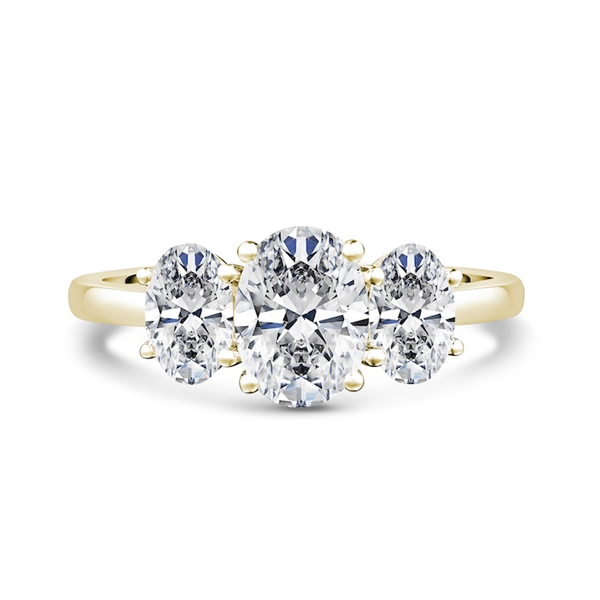
Engagement ring band width affects the ring's appearance and feel, but width alone does not determine strength. Metal, thickness, profile, stone settings and the size of the centre all contribute to the construction.
A very fine band can look appealing in a photograph. Before choosing one, ask for the dimensions and understand how the complete design will handle ordinary wear.
Distinguish engagement ring band width from thickness
Width is the measurement across the band when viewed from above. Thickness, or depth, describes the metal from the inner surface towards the outer surface at a particular point.
Two rings can share the same stated width while containing different amounts of metal. A flat band and a rounded band can also feel different at similar dimensions.
Ask where measurements were taken. A tapered shank may be wider at the base than near the centre, or the reverse.
Consider the centre and the shoulders together
A large or tall centre creates a different design problem from a small, low-set stone. The shoulders and basket need to support the intended arrangement.
Do not choose a band from an isolated width number. Review its profile, how it connects to the centre and whether the jeweller considers it appropriate for the selected stone.
A design render can clarify the shape, but the specification should explain the actual dimensions.
Allow for diamond-set bands
Pavé and other small-stone arrangements require metal to form seats and hold the diamonds. The visible band width does not tell you how much supporting metal remains around those settings.
Very delicate diamond-set bands therefore deserve careful review. Ask about construction, maintenance and resizing limitations before ordering. A plain band and a pavé band should not be judged by the same single measurement.
GIA's ring-sizing guide notes that stone-set designs can complicate later alterations.
Think about how you will wear the ring
Fine jewellery is not designed for heavy gripping or repeated impact. Removing a ring for gym work, lifting and similar activities helps protect it, regardless of the chosen width.
If you prefer a very delicate look, discuss ways to achieve the visual effect while maintaining suitable construction. A taper or carefully chosen profile may change the appearance without making every part equally fine.
Compare at normal scale
Enlarged images make narrow bands look more substantial. View dimensions against a ruler or a comparable ring, and consider how the band looks with the selected centre.
Also think about a future wedding band. A wider companion can change the balance and combined feel of the pair. The wedding collection is useful for considering that relationship.
Common questions
Is there one minimum width for every ring?
No. A universal number would ignore metal, thickness, profile and setting construction. Seek advice for the actual design.
Does a wider band always last longer?
Width is only one variable. Construction, care and wear conditions also matter.
What should I request?
Ask for engagement ring band width and thickness at relevant points, plus guidance for the selected centre and any pavé. Use those details when comparing engagement designs.