
Diamond education
Diamond Carat Weight vs Size: Why Measurements Matter
Understand diamond carat weight vs size, why equal weights look different and how measurements help you compare jewellery.
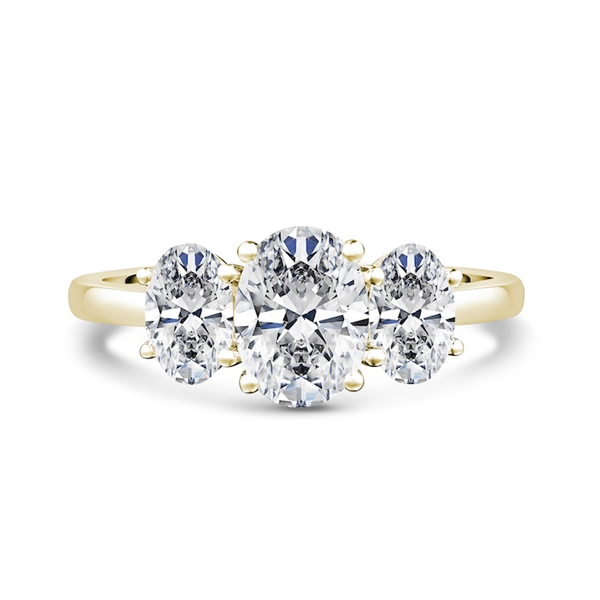
Diamond carat weight vs size is one of the most useful distinctions to understand before buying jewellery. Carat measures weight. Visible size depends on the diamond's outline and proportions, as well as the setting.
A carat figure should therefore sit beside millimetre measurements when you compare stones. The two pieces of information answer different questions.
Diamond carat weight vs size: what each tells you
One metric carat is 0.2 grams. A 0.50 ct diamond weighs half a carat, while a 2.00 ct stone weighs two carats. These figures do not specify a fixed diameter or length.
GIA's carat explanation sets out the unit. For visual comparison, look at the actual diamond's length, width and depth.
Do not confuse diamond carat weight with gold carat fineness. A 1.00 ct diamond set in 18ct gold uses similar wording for different measurements.
Shape changes the visible outline
A round diamond spreads its outline differently from an oval or marquise. An elongated shape may cover more of the finger in one direction, while a round creates a different balance of width and symmetry.
There is no universal winner. A long, narrow outline may appear prominent in one photograph and less substantial in another. Compare shape, length and width rather than treating one dimension as a quality score.
The shape guide helps you compare silhouettes before focusing on weight.
Depth influences where weight sits
Some weight sits below a diamond's visible top. Consequently, equal weights can have different face-up measurements. A deeper stone is not automatically better or worse; assess its complete proportions and appearance.
Chasing the widest possible outline can also lead you to overlook light performance. A diamond should look attractive as it moves, rather than meeting only a preferred measurement.
Use numbers to clarify preference
Imagine two hypothetical oval diamonds measuring 9.0 × 6.0 mm and 9.6 × 5.8 mm. The second is longer but narrower. These examples illustrate shape preference; they do not promise dimensions at a specific weight.
A length-to-width calculation gives 1.50 for the first and about 1.66 for the second. The ratio describes outline, not overall quality. You may prefer either appearance.
Allow for setting and viewing conditions
A halo increases the overall ring footprint without increasing centre weight. A broad bezel changes the visible edge. Claw position, band width and finger size also influence the impression of scale.
Ask whether an on-hand photograph shows your chosen diamond option and a comparable finger size. A life-size outline can help explain measurements, but cannot show how the actual diamond will sparkle.
Compare jewellery consistently
For earrings, determine whether weight is per stone or for the pair. For a trilogy, separate centre weight from side weight. A total across several diamonds cannot predict one centre's dimensions.
When browsing engagement designs, check the selected specification. A render may represent only one example of the available sizes.
Common questions
Does twice the carat weight mean twice the diameter?
No. Weight and linear measurements do not increase in that simple proportion.
Can I use a size chart?
Yes, as an approximate visual aid. The actual stone's measurements are more reliable.
Which number should I prioritise?
Use both. Diamond carat weight vs size is not a choice between competing measurements: weight describes mass, while dimensions explain the appearance you will wear.