
Complimentary insured UK delivery
Jewel of London

Engagement rings

Trilogy Ring Proportions: Balancing Centre and Side Stones

Compare trilogy ring proportions using centre and side-stone measurements, finger coverage, stone angles and setting height.
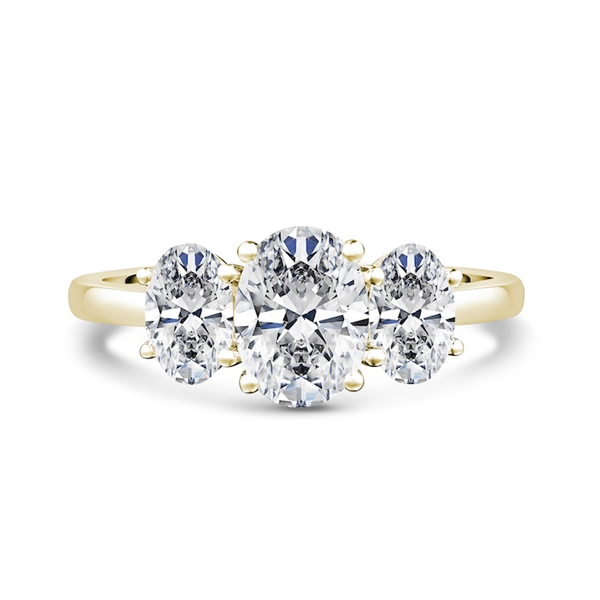
Oval trilogy engagement ring in yellow gold

Trilogy ring proportions depend on the relationship between all three stones, not the centre carat weight alone. Their widths, lengths, angles and settings determine whether the ring feels centre-led or spreads evenly across the finger.

Choosing the side stones involves more than selecting a combined carat weight. The actual dimensions and the way the three stones sit together are essential.

Compare trilogy ring proportions at the same scale

The centre's length, width and depth establish the starting point. A round centre and an elongated oval need different relationships with their supporting stones.

Choose the outline you enjoy before trying to specify an ideal side-pair weight. The same pair can appear dominant beside one centre and restrained beside another.

Use the diamond-shape guide to compare centres, then review the complete arrangement.

Compare side stones by visible scale

Carat weight is useful, but it does not describe the full outline. Two pear sides, two rounds and two baguettes can share a combined weight while creating different widths.

Ask for each side's dimensions and the total span across the ring. If you prefer a centre-led design, make sure the sides support that intention at normal viewing size.

GIA's discussion of baguette settings illustrates how side-stone shape can change a ring's composition. The right choice depends on the whole design.

Match the pair as well as the grades

The two sides should work together visually. Consider outline, dimensions, colour appearance and light pattern. Matching grades alone cannot guarantee a balanced pair.

Also look at their angle. Side stones can slope towards the band or sit closer to the centre's plane. That decision changes both the top view and the ring's height.

Request a side profile rather than judging from a straight-on render alone.

Check the structure and wedding-band clearance

Three settings introduce more junctions and possible contact points than a simple solitaire. Look at the metal supporting the sides and the space around their edges.

If a wedding band is planned, assess it alongside the trilogy. A straight band may sit beneath the settings, or a contour may be needed. The answer depends on the actual mounting.

Daily comfort matters too. A broad ring should not press uncomfortably against neighbouring fingers.

Get a complete price breakdown

Confirm the centre price, included side pair and any charge for a different side option. Ask whether the displayed carat total includes all three stones and any diamond shoulders.

At Jewel of London, check the selected trilogy's complete specification and obtain clarification for any side-stone option that needs a separate quote. This guide does not assume every combination has the same included side pair.

Browse the trilogy selection, then compare complete options rather than isolated centre prices.

A practical comparison

For a useful comparison, ask for two layouts with the same centre diamond and different side-stone sizes. Keep the viewing angle and scale consistent. Notice how much of the centre remains visually distinct, where the side stones end, and whether the outer settings would sit comfortably. This isolates the choice you are making. Comparing unrelated photographs with different centres, hands and zoom levels makes the effect much harder to judge.

Common questions

Is there a universal side-stone ratio?

No. Shape, dimensions and the intended visual balance matter more than a fixed weight formula.

Do the side stones have to match the centre's shape?

No. Contrasting sides can work well if their scale and angle suit the centre.

What should decide the final choice?

For trilogy engagement rings, review all three stones as one composition. Confirm the top view, profile, comfort and complete price before ordering.
Related reading

Buying advice · 26 October 2026

Lab-Grown Gold vs Diamonds: What Jewellery Buyers Should Know

Lab-grown gold vs diamonds: the latest headlines invite a comparison, but the science is very different. The US announcement is intriguing. It does not mean the two materials are made in the same way or that a new range of affordable gold jewellery has arrived.

At Jewel of London, we want the words on a jewellery page to help you choose confidently. Here is how to read this story, what remains unproven and which details still matter when you shop.

Fact-check date: 26 October 2026. Company claims are identified as claims; shopping guidance is our interpretation of the evidence.

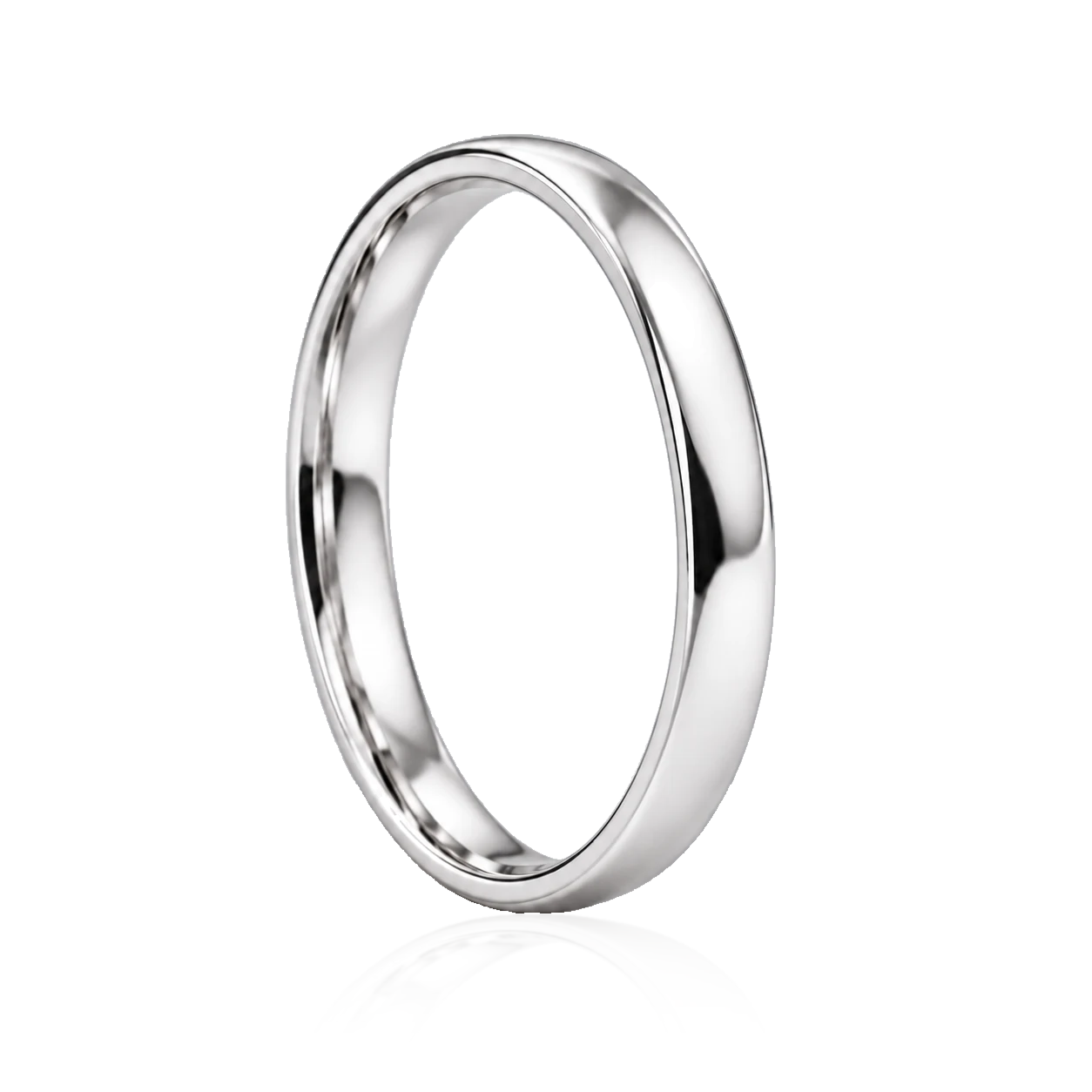
Jewel of London 2.5mm Light Court wedding band in white gold, side view
An existing Jewel of London wedding band, shown as a jewellery illustration. It is not made from the gold reported in the experiment.

The lab-grown gold news in brief

San Francisco company Marathon Fusion announced on 21 October that it had converted mercury into stable gold during the previous month. The company claimed a production rate ten times a CERN benchmark.

Reporting dated 23 October said the result had not been independently verified, and the public material did not establish total output or cost. Our review found no independent confirmation. The relevant dates are September for the claimed experiment and October for the announcement, rather than a discovery made yesterday.

For an explanation of the material already used in jewellery, read our lab-grown diamond guide.

Lab-grown gold vs diamonds: the key difference

The distinction starts with the atoms. Gold is an element with 79 protons in its nucleus, as listed by the Royal Society of Chemistry. Producing it from a different element requires a nuclear reaction.

A diamond is carbon in a crystal structure. GIA describes two established growth methods: HPHT, using high pressure and temperature, and CVD, using carbon-containing gas. Neither needs to manufacture a new element.

Question Lab-grown diamonds Gold in this announcement
What happens? Carbon forms diamond crystals. A nuclear process converts mercury towards gold.
What should a buyer look for? Clear origin disclosure and the individual stone’s specifications. Verified output, usable material and a documented supply route before considering a purchase.
Does one predict the other’s price? No. Similar wording does not establish similar production economics.

How does mercury become gold?

In Marathon’s proposed route, fusion supplies high-energy neutrons. A reaction changes mercury-198 into mercury-197, which then decays into stable gold-197. This is called nuclear transmutation.

The word “stable” describes that gold isotope. It does not, on its own, establish that the entire experimental sample is ready for jewellery. The company’s research paper discusses radioactive by-products, separation and storage considerations. Those issues belong in any assessment of a future supply chain.

Is this the first time scientists have made gold?

No. CERN’s May 2025 explanation describes creating gold nuclei from lead at the Large Hadron Collider, and notes earlier artificial production. Its reported quantities were tiny and the nuclei quickly fragmented after hitting equipment.

A record rate needs context: what was measured, for how long and how much material could be recovered? It should not be read as a factory producing gold bars for jewellers.

Read the stone and metal descriptions separately

When you see “lab-grown diamond ring”, the phrase describes the diamond’s origin. It does not automatically describe how the metal was sourced. Check the metal selector and the final specification as a separate part of the purchase.

For example, a ring described as an 18ct yellow-gold setting with a lab-grown diamond tells you about two different materials. The World Gold Council’s guide explains that 18ct is 75% gold, while alloying metals contribute colour and durability. “Lab-grown” beside the diamond does not turn that gold into laboratory-created gold.

White gold and rose gold also describe gold alloys. They are not evidence of nuclear transmutation. Our metal guide helps you compare the choices independently of the stone.

What would make lab-grown gold ready to buy?

Our shopping test is straightforward: can the seller explain exactly what you are buying and support that description?

This is a buyer’s checklist, not a statement that those conditions have been met by the experiment. A future technology becomes a shopping option only when it can be assessed as an actual product.

Explore Jewel of London engagement rings and compare the specifications currently offered.

Does it mean lower prices or a greener product?

Neither conclusion follows automatically. We have not identified verified commercial costs that justify predicting cheaper jewellery from this announcement. A technical demonstration and an affordable retail supply are separate achievements.

We would also want evidence covering the full production route before describing a new material as environmentally preferable. That includes its inputs, energy, processing and waste. The word “lab” alone is not an environmental assessment.

For any jewellery purchase, ask what a sourcing claim applies to: the diamond, the gold, the packaging or the finished item. A precise statement is more useful than a broad label. Our five questions about lab-grown diamonds offers a starting point.

Keep the paperwork clear

Separate the diamond’s documentation from the metal’s hallmark. UK government guidance explains that a full UK hallmark includes a sponsor’s mark, a fineness mark and an Assay Office mark. It supports the precious-metal description; it does not identify a diamond’s growth origin.

Save the order specification showing the choices you selected. If you change the metal or diamond weight before checkout, check that the final summary reflects both. These simple checks remain useful whatever new materials emerge.

Frequently asked questions

Are lab-grown diamonds made using nuclear reactions?

No. The HPHT and CVD methods described by GIA grow diamond from carbon. They are different from the mercury-to-gold nuclear process in this story.

Does “lab-grown diamond jewellery” mean the gold is lab-grown?

No. The diamond’s origin and the setting’s metal description are separate. Read both parts of the product specification.

Is recycled gold lab-grown gold?

No. Recycling reuses existing gold. It does not transform another element into gold.

Can I buy Marathon’s experimental gold from Jewel of London?

This is an educational article, not a product launch. The sources reviewed do not establish a jewellery-ready retail supply from this process.

Will the news make my jewellery worthless?

The reviewed evidence does not support that conclusion. A company’s experimental claim is not a valuation of your piece or a reliable forecast of future prices.

A clear view before you choose

When comparing lab-grown gold vs diamonds, follow the evidence for each material separately. Today, the most useful information remains the information attached to your chosen piece: diamond origin, metal, dimensions, complete price and aftercare.

Ask Jewel of London for help with your selection if you would like a specification explained before ordering.

Related reading

Engagement rings

Toi et Moi Rings Explained: Meaning, Stone Pairings and Design

Discover Toi et Moi rings, their two-stone meaning and the choices behind balanced pairings and comfortable settings.

Oval trilogy engagement ring in yellow gold

Toi et Moi rings bring two principal stones together in one design. The French phrase means “you and me”, making the arrangement a natural choice for a ring that represents a partnership.

The strongest designs balance two distinct shapes without forcing them to look identical. Proportion, spacing and setting height matter as much as the symbolism.

What distinguishes Toi et Moi rings?

Unlike a trilogy, which usually has a dominant centre and two supporting sides, a Toi et Moi gives two stones a central role. They may match or deliberately contrast.

GIA discusses the two-stone tradition among gemstone engagement-ring designs. Modern interpretations can combine diamond shapes or use contrasting materials, but every pairing needs its own practical assessment.

This educational guide does not imply that every pairing is available in Jewel's current collection.

Balance dimensions rather than equal weights

Two stones of equal carat weight may not look equally prominent. An elongated pear and a round diamond distribute their outlines differently. Compare their length, width and apparent presence together.

A useful design review shows both stones at the intended angle and realistic scale. Looking at them separately cannot establish whether the pair feels balanced once mounted.

You may prefer one stone to lead slightly. That can be intentional; balance does not require strict symmetry.

Consider how the stones face each other

Rotation changes the design. Two parallel stones feel different from a pair that leans inward. A pointed end can draw the eye towards the centre or away from it.

Inspect the space between the stones and the claws around that junction. The setting must keep them secure without creating unintended contact or making cleaning unnecessarily difficult.

Ask for top, side and angled views. A pleasing flat composition can still have a bulky or uneven profile.

Choose materials with compatible care needs

If two different gemstone types are used, care should suit the more sensitive component. Hardness alone does not describe resistance to impact, heat or chemicals.

Ask about treatments and the practical suitability of each stone for the intended wear. A coloured centre chosen for meaning should still work with the mounting and care routine.

For two diamonds, compare their visible colour and light patterns together rather than relying solely on separate grade labels.

Read the price and carat breakdown

A two-stone ring may be described using a combined weight. Request each principal stone's individual weight and measurements, plus any accent-diamond weight.

Confirm origin, documentation, metal and complete price. Do not assume a quoted “2 ct ring” contains two 2 ct stones.

If you are exploring the design, use the contact page to ask what options are currently available and how their specifications are recorded.

Common questions

Must the two stones be the same shape?

No. Matching and contrasting shapes can both work when their proportions and setting are considered together.

Must they weigh the same?

No. Equal weight is not the same as equal visual presence.

Can a straight wedding band sit beside one?

Sometimes, but the two baskets and their angles affect clearance. For Toi et Moi rings, assess the actual bridal pairing from the side before committing.

Related reading

Engagement rings

Marquise Diamond Engagement Rings: Shape, Symmetry and Setting Choices

Compare marquise diamond engagement rings by symmetry, measurements, light patterns and protection for pointed ends.

Oval trilogy engagement ring in yellow gold

Marquise diamond engagement rings create a long outline with two pointed ends. The shape can give a ring a strong sense of direction, but the proportions and mounting determine whether it feels delicate, dramatic or somewhere between.

Start with the actual dimensions. A long centre can have a substantial footprint even when its weight is similar to a less elongated shape.

Assess symmetry in marquise diamond engagement rings

Look at the stone straight-on. The two tips should align with the overall shape, and the curves on either side should feel balanced. Pay attention to the shoulders rather than concentrating only on length.

GIA's marquise guide discusses these outline considerations. A length-to-width ratio describes proportion, but it does not replace inspection.

Compare fuller and slimmer examples at realistic scale. A preferred silhouette is personal; a narrow ratio should not become a shortcut for judging quality.

Examine the centre pattern

A marquise can show a bow-tie appearance across its middle. Watch the actual diamond as it moves, noting whether the contrast changes or dominates your view.

Ask for ordinary-light images or video where available. Strong jewellery lighting can make almost any stone appear more animated, while an unflattering camera angle can exaggerate darkness. Comparable conditions make the assessment more useful.

Give both tips deliberate protection

The setting needs to account for the two pointed ends. Ask how each tip is protected and how the supporting claws or bezel relate to the stone's dimensions.

Avoid choosing security by appearance alone. Very fine metal may look elegant in an enlarged render, but its construction and condition matter. Equally, heavy-looking claws can alter the silhouette without proving better workmanship.

A professional should assess any feature near a vulnerable point. The report and actual stone need to be considered together.

Balance the band and side stones

A plain band emphasises the long centre. Side stones can create a wider composition, especially in a trilogy. Their dimensions, angles and height should be considered as a pair around the marquise.

A small change in side-stone position can make the ring look broader or more tapered. Review a complete top view rather than separate pictures of the centre and sides.

The trilogy guide explains why total weight alone cannot establish a balanced three-stone ring.

Check comfort and neighbouring rings

Inspect the side profile, overall height and the ends' position during hand movement. Discuss your routine, especially if you frequently wear gloves or work with your hands.

Also check the proposed wedding band. A marquise's length may overhang a straight band, while its basket can create contact that is not obvious from above. The actual pairing determines whether a contour is useful.

Browse Jewel's marquise selection with dimensions and profile in mind.

Common questions

Is a marquise suitable for a solitaire?

Yes. The shape can work as a solitaire or in a multi-stone design when properly mounted.

Will every marquise show the same bow tie?

No. Appearance varies by stone and viewing conditions.

What should I ask before ordering?

For marquise diamond engagement rings, confirm symmetry, tip protection, dimensions and the complete selected specification. Those details matter more than a shape label alone.

Related reading

Engagement rings

Pear-Shaped Engagement Rings: Proportions, Orientation and Protection

Explore pear-shaped engagement rings, including proportions, orientation, tip protection and wedding-band fit.

Pear-shaped diamond engagement ring in yellow gold

Pear-shaped engagement rings combine one rounded end with a point. That asymmetry gives the design a clear direction, whether the stone sits along the finger, across it or at an angle.

The outline needs careful assessment. A balanced pear should appeal as a whole rather than simply meet a chosen carat weight or length-to-width ratio.

Compare the outline of pear-shaped engagement rings

Look at both sides of the stone. Consider the shoulders, curved end and transition towards the point. A fuller pear and a narrow, elongated pear can feel very different on the hand.

Ask for length and width in millimetres. Then view the stone straight-on. A tilted image can make one shoulder look heavier and complicate comparison.

GIA's pear-shaped diamond guide explains the importance of examining the outline. Use its principles to ask questions about the actual diamond rather than applying a single “perfect” ratio.

Watch the centre as it moves

A pear can show contrasting light and dark areas, including a bow-tie appearance. Watch how those areas change through a video or direct viewing.

Do not judge the stone only under strong spotlights. Request ordinary-light views where available and pay attention to whether one area remains distracting. Some contrast is part of a faceted diamond's pattern; your preference concerns its balance.

Decide how you want to wear the point

There is no compulsory direction. Some wearers prefer the tip towards the fingertip; others prefer the reverse. Angled and east-west designs create another look.

Orientation affects how the ring occupies the hand and how it may sit beside another band. Check that the chosen mounting is designed for the intended arrangement. A ring shown vertically cannot automatically be rotated within its setting.

Protect the pointed end

The tip deserves specific attention in the mounting. Ask how the design protects it and whether the stone has any feature near that area needing professional assessment.

A protective claw or bezel must still suit the actual diamond. The security of a setting depends on construction, fit and condition, not simply the number of claws named in a listing.

Inspect the profile as well. Consider height, cleaning access and how the point sits during ordinary hand movement.

Plan the wedding-band relationship

A pointed centre may extend over the space occupied by a straight wedding band. A contoured or wishbone band can offer a different relationship, but it must be checked against the actual ring.

Compare the pair from above and the side. The aim is a comfortable fit without unwanted pressure against claws or exposed stone edges.

Explore Jewel's pear designs and wedding bands as a coordinated decision rather than separate photographs.

Common questions

Must the point face a certain way?

No. Choose the orientation you enjoy, provided the setting is designed to support it.

Does a longer pear always look better?

No. Length, width and shoulder shape work together. Judge the actual outline.

What is the main practical check?

For pear-shaped engagement rings, confirm deliberate tip protection and a suitable side profile, alongside the diamond's documented specification.

Related reading

Diamond education

Oval vs Round Diamonds: Comparing Appearance at the Same Carat Weight

Compare oval vs round diamonds at the same weight, including measurements, light patterns, settings and finger coverage.

Oval trilogy engagement ring in yellow gold

Oval vs round diamonds is a choice between an elongated silhouette and a circular one. At equal carat weight, their proportions can create quite different impressions on the hand.

Rather than asking which always looks bigger, compare the actual dimensions, light pattern and setting. Those details make the decision more useful and more personal.

Oval vs round diamonds: understand the footprint

For a round stone, diameter gives a clear starting point. For an oval, both length and width matter. An oval may extend further along the finger while being narrower across it.

Equal weight does not imply equal visible area, and a longer measurement does not describe the whole appearance. Use the actual millimetres rather than a generic carat chart whenever possible.

The carat guide explains why weight and size should be read together.

Compare the pattern in motion

A round brilliant presents a different arrangement of reflections from an oval. Depending on the individual stone, an oval may show a darker band through the middle. Its visual impact can change as the stone moves.

Round diamonds also vary in quality and appearance. A round outline does not guarantee a pleasing cut. GIA's round-diamond guide provides context for assessing the individual centre.

View stones in similar lighting. Avoid choosing based only on which photograph has the brightest exposure.

Consider symmetry and proportion

With an oval, decide whether you like a fuller or slimmer outline. Inspect the shoulders and ends for a balanced appearance. With a round, consider how the circular centre relates to the band and claws.

If possible, compare settings with similar metal, band width and photographic scale. Otherwise, you may be reacting to the mounting rather than the shape.

Assess the whole ring on the hand

An elongated centre can create a different visual line along the finger. A round can offer a balanced, central footprint. Neither requires a particular hand shape to look good.

Try a realistic outline or comparable sample if available. Photographs on another person's hand are helpful inspiration, but their finger size and the ring's exact dimensions affect the result.

Consider whether you prefer the stone facing along the finger or, where offered, across it. Orientation is a design choice that needs a suitable mounting.

Check profile and future pairing

Either shape can sit in a low or high setting. The basket and shoulders determine practical height and wedding-band clearance. Do not infer those details from the outline.

Review side views and discuss your intended bridal pairing before ordering. A small gap can be a comfortable design choice; a close fit needs enough clearance to avoid unwanted contact.

Explore oval designs and round designs with the same complete-budget limit.

Common questions

Does an oval always cost less?

No fixed rule covers every current quote. Compare origin, specifications, dimensions and the completed ring.

Does a round always sparkle more?

Sparkle depends on the particular stone and conditions. The patterns differ, so assess the appearance you prefer.

What should decide the choice?

Let the oval vs round diamonds comparison guide your preferred silhouette. Then choose the individual stone and setting that deliver that look comfortably.

Related reading

Diamond education

Elongated Cushion vs Radiant-Cut Diamonds: How to Choose

Compare elongated cushion vs radiant diamonds by outline, corners, facet patterns and proportions in a finished ring.

Oval trilogy engagement ring in yellow gold

Elongated cushion vs radiant is a comparison between two long outlines with different edges. A cushion has rounded corners and a softer silhouette. A radiant typically has straighter sides and clipped corners.

Both categories contain varied facet patterns. The outline is a useful starting point, but the actual diamond determines the final appearance.

Elongated cushion vs radiant: compare the edges

Look first at the corners and sides without concentrating on sparkle. Decide whether you enjoy the cushion's rounded transitions or the radiant's more angular geometry.

Then compare how full the outline feels. One elongated cushion may have noticeably curved sides, while another looks more rectangular. A shape label cannot describe every variation within the category.

Use actual millimetre dimensions, rather than assuming that the same carat weight will produce matching footprints.

Do not assume a single cushion pattern

Cushion diamonds can have different cutting styles and visual patterns. Some display broader flashes; others have a finer texture. GIA's cushion guide explains why individual assessment matters.

Radiants also vary. View both stones under comparable lighting and watch the reflections move. Descriptive labels about sparkle can help a conversation, but they should not replace the evidence in front of you.

Compare the same degree of elongation

If one stone is much longer relative to its width, you may be responding to proportion rather than shape. Start with comparable ratios to understand the difference in corners, then explore more elongated or fuller options.

For example, a ratio is simply length divided by width. It does not certify quality or tell you how the stone will behave in light. Use it to organise a shortlist, not to approve a diamond automatically.

Consider how the setting changes the outline

A halo follows the centre's perimeter and can emphasise its shape. A bezel adds a visible metal edge. Claws can either maintain the corners' character or make the silhouette feel heavier, depending on scale and placement.

View the ring at normal size. Details that look delicate in an enlarged render may feel different when combined with a particular centre and band width.

The engagement collection allows you to compare the broader design language before choosing individual specifications.

Think about the side view and wedding band

Elongated stones can have a substantial footprint above the finger. Check the basket height, support and the space beside the setting. A narrow shank does not guarantee that another ring will fit close.

If you want a bridal pair, ask to see the proposed rings together in profile. The dimensions of the mounting matter more than whether the centre is called cushion or radiant.

Common questions

Does elongated cushion mean antique-style?

No. Outline and facet pattern are separate considerations. A cushion can appear modern or more traditional depending on the stone and setting.

Is a radiant always more sparkly?

There is no useful blanket guarantee. Compare actual stones and the style of reflections you enjoy.

How do I make the final choice?

Use the elongated cushion vs radiant comparison to identify your preferred edge and light pattern. Then check measurements, setting practicality and the complete quote for that specific design.

Related reading

Diamond education

Radiant vs Emerald-Cut Diamonds: Comparing Sparkle and Style

Compare radiant vs emerald-cut diamonds by facet pattern, proportions, visible inclusions and the appearance you prefer.

Oval trilogy engagement ring in yellow gold

Radiant vs emerald-cut diamonds is a useful comparison because both can have a rectangular outline and clipped corners. Inside that outline, however, their facet patterns create different visual experiences.

Choose between them by watching actual stones move. A shape chart shows the silhouette, but it cannot reproduce the character of their reflections.

Radiant vs emerald-cut diamonds at a glance

A radiant uses a brilliant-style arrangement of facets. An emerald cut uses broad step facets, which create a more geometric sequence of reflections.

GIA's emerald-cut guide explains the distinctive step-cut appearance. Neither style should be reduced to a claim that one has sparkle and the other does not. They display light differently.

If you enjoy a finely animated pattern, a radiant may appeal. If you prefer broad, deliberate flashes and a clear architectural outline, an emerald cut may attract you. View examples rather than treating those descriptions as strict rules.

Compare equal-looking outlines

Carat weight alone is not a fair visual comparison. Start with length and width, and decide whether you are comparing square, moderate or strongly elongated rectangles.

A hypothetical 9 × 6 mm stone has a different footprint from one measuring 10 × 5.5 mm. Even when both are called rectangular, one may appear fuller and the other more slender.

Corner proportions also affect the outline. Look at the entire stone rather than selecting only a target ratio.

Adjust how you assess clarity

Broad step facets can make some internal characteristics easier to notice. That does not justify a universal minimum grade; the location and appearance of a particular inclusion still matter.

With either style, review the actual stone at normal scale as well as under magnification. Ask about visibility and any feature requiring durability assessment. A radiant's busier pattern should not become an excuse to skip those checks.

Compare colour and movement

Use similar lighting and backgrounds. Observe whether the pattern remains pleasing as the stone tilts, and whether any dark areas dominate your view.

Metal choice also influences the overall presentation. Yellow gold may create a warm architectural frame, while white metal gives a different contrast. Choose the complete palette you like instead of following a rigid pairing rule.

Think about the ring design

Both shapes can work in solitaires, halos and multi-stone settings. A plain mounting draws attention to the centre pattern. Side stones add another relationship to balance.

For a fair price comparison, keep metal, approximate dimensions and setting complexity consistent. Jewel's radiant and emerald engagement selections use lab-grown centres. Compare the chosen configurations rather than the lowest price in each category.

Common questions

Does an emerald cut look less lively?

Its broad flashes differ from a radiant's pattern. Whether you prefer that effect is personal and should be judged in motion.

Can equal carat weights look different in size?

Yes. Measurements and weight distribution matter.

Which should I choose?

When comparing radiant vs emerald-cut diamonds, start with the light pattern you enjoy. Then choose a stone with suitable dimensions, clear documentation and a setting that supports its outline.

Related reading

Engagement rings

Radiant-Cut Engagement Rings: What to Look for in a Diamond

Explore radiant-cut engagement rings and compare diamond outlines, dimensions, facet patterns and protective settings.

Oval trilogy engagement ring in yellow gold

Radiant-cut engagement rings combine an angular outline with a brilliant-style facet pattern. The corners are cut away, and the outline can be closer to square or more elongated. The result can feel structured while remaining visually lively.

Not every radiant produces the same kind of sparkle. Compare the actual stone rather than choosing from the shape name and carat weight alone.

Start with the outline of radiant-cut engagement rings

Decide whether you prefer a square appearance or a longer rectangle. Length-to-width ratio helps describe that preference, but millimetre dimensions are equally important.

Check the clipped corners and overall symmetry. The outline should feel balanced to your eye, without one side appearing heavier. A ratio cannot tell you whether you like the proportions of the corner cuts.

Compare stones in the same orientation. A slight tilt can change the apparent width and make a photograph an unreliable guide to outline.

Look closely at the facet pattern

Radiants can show different sizes and arrangements of reflections. Some appear more finely textured; others present larger, clearer flashes. These are visual descriptions, not a complete grading scale.

GIA's diamond-shape guide places radiant shapes within the wider range of cutting styles. Your assessment should focus on the particular diamond's brightness and contrast as it moves.

Ask for video in more than one lighting condition where available. Look for areas that remain noticeably dull or distracting rather than judging one frame.

Read measurements beside weight

A larger carat figure does not guarantee proportionately greater finger coverage. Compare length and width, and review the report's other proportion information in context.

Do not use a single depth or table percentage as a universal approval rule. Cutting styles vary, and the complete visual result matters. For an elongated radiant, width deserves attention as well as length.

Compare colour and clarity in the actual stone

Check the report and ask what can be seen at normal viewing distance. A lively pattern may make some features less obvious, but it is not a guarantee that every stone within a grade will appear clean.

Likewise, assess colour in a comparable environment. Surrounding metal and lighting influence perception. For a trilogy, consider how the side diamonds look beside the centre.

Inspect the mounting

Claws should work with the cut corners and actual dimensions. Look at their scale: heavy claws can change the angular outline, while very fine claws still need adequate construction and maintenance.

Review the ring from the side. Confirm band width, setting height and wedding-band clearance. A rectangular centre can have a substantial footprint even when the shank looks delicate.

Explore Jewel's radiant selection, remembering that the engagement centres are lab-grown and that renders illustrate design rather than individual diamond performance.

Common questions

Is a radiant the same as an emerald cut?

No. Both can be rectangular with clipped corners, but their facet patterns create different visual effects.

Is a longer radiant always better?

No. Elongation is a preference, and a narrow outline does not automatically improve the stone.

What makes a strong shortlist?

Shortlist radiant-cut engagement rings using actual measurements, appealing movement and a practical setting, then compare their complete specifications and prices.

Related reading

Engagement rings

Oval Diamond Engagement Rings: Proportions, Settings and Buying Tips

Compare oval diamond engagement rings by proportions, bow-tie appearance, setting height and the stone's measurements.

Oval diamond trilogy engagement ring in yellow gold

Oval diamond engagement rings offer an elongated outline with softly curved ends. Within that description, the differences can be substantial. A broad oval and a slender oval may carry similar weight while creating very different rings.

Start with the proportions you enjoy, then assess the actual stone's appearance and how the mounting supports it.

Compare oval diamond engagement rings by dimensions

Ask for length and width in millimetres. Dividing length by width gives the length-to-width ratio, a useful description of the outline.

For example, hypothetical dimensions of 9.0 × 6.0 mm produce a ratio of 1.50. This arithmetic describes shape, not an ideal grade. A preferred ratio should never replace checking symmetry, light performance and the actual footprint on the hand.

Compare images at the same scale where possible. A tightly cropped photograph can make a smaller stone appear more substantial than a larger one in a wider frame.

Understand the bow-tie appearance

Some ovals show a darker band across the centre, commonly called a bow tie. Its strength and visual effect can change with lighting, viewing angle and the observer's position.

GIA's guidance on fancy shapes highlights the need to examine individual stones. A single bright still image cannot explain how that pattern behaves in motion.

Look for a pleasing balance across the diamond. Some contrast helps define a lively pattern; the concern is an area that remains distracting to you through normal viewing.

Judge the whole outline

Look at the shoulders and curved ends. Consider whether the left and right sides feel balanced and whether the outline is full or narrow in the places you prefer.

Do not use weight alone to estimate finger coverage. Also compare the width. Two stones with similar length can create different impressions if one is noticeably slimmer.

The diamond-shape guide provides context if you are also considering pear, marquise or round designs.

Choose a setting that suits the profile

Claw position changes how much of the oval edge remains visible. The basket and shoulders determine the side view, support and practical height. Ask to see both front and profile views.

Consider the wedding band before finalising the ring. An oval can extend beyond a narrow shank, and a low basket may prevent a straight band from sitting close. Clearance depends on the actual structure rather than the shape name alone.

Compare the completed specification

Jewel's engagement centres are lab-grown. Compare the selected metal, diamond dimensions, documentation and full price. Make sure any photograph or render is identified as a design example if it does not show the actual selected stone.

Browse the oval engagement selection, then narrow the choice using the profile and measurements.

Common questions

Is there a perfect oval ratio?

No universal ratio suits every preference or stone. Use it to describe shape, then assess appearance.

Will an oval always look larger than a round?

It may create more length, but visible size depends on both stones' dimensions and settings.

What should I prioritise?

Choose oval diamond engagement rings for an outline you enjoy, a balanced appearance in motion and a setting that fits your daily life.

Related reading

Your bag

Enjoy 10% off
Join our newsletter and enjoy 10% off full-price jewellery.
    Get my 10% code
    Email me new collections and offers.
    Unsubscribe anytime. Privacy
    No thanks, I’ll keep browsing