
Engagement rings
Radiant-Cut Engagement Rings: What to Look for in a Diamond
Explore radiant-cut engagement rings and compare diamond outlines, dimensions, facet patterns and protective settings.
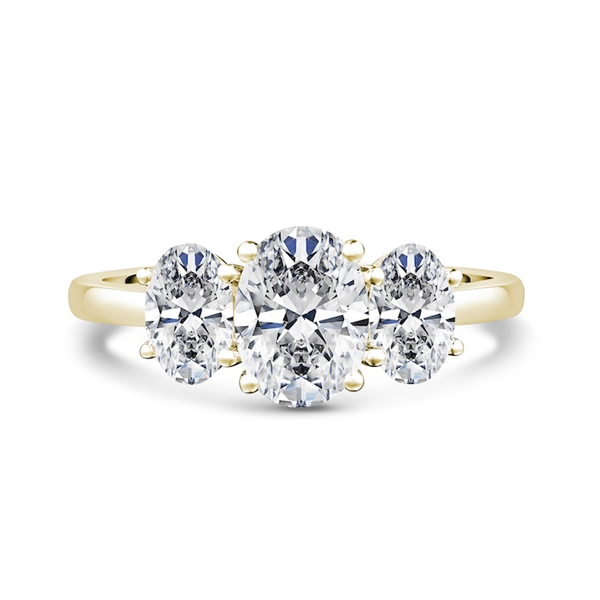
Radiant-cut engagement rings combine an angular outline with a brilliant-style facet pattern. The corners are cut away, and the outline can be closer to square or more elongated. The result can feel structured while remaining visually lively.
Not every radiant produces the same kind of sparkle. Compare the actual stone rather than choosing from the shape name and carat weight alone.
Start with the outline of radiant-cut engagement rings
Decide whether you prefer a square appearance or a longer rectangle. Length-to-width ratio helps describe that preference, but millimetre dimensions are equally important.
Check the clipped corners and overall symmetry. The outline should feel balanced to your eye, without one side appearing heavier. A ratio cannot tell you whether you like the proportions of the corner cuts.
Compare stones in the same orientation. A slight tilt can change the apparent width and make a photograph an unreliable guide to outline.
Look closely at the facet pattern
Radiants can show different sizes and arrangements of reflections. Some appear more finely textured; others present larger, clearer flashes. These are visual descriptions, not a complete grading scale.
GIA's diamond-shape guide places radiant shapes within the wider range of cutting styles. Your assessment should focus on the particular diamond's brightness and contrast as it moves.
Ask for video in more than one lighting condition where available. Look for areas that remain noticeably dull or distracting rather than judging one frame.
Read measurements beside weight
A larger carat figure does not guarantee proportionately greater finger coverage. Compare length and width, and review the report's other proportion information in context.
Do not use a single depth or table percentage as a universal approval rule. Cutting styles vary, and the complete visual result matters. For an elongated radiant, width deserves attention as well as length.
Compare colour and clarity in the actual stone
Check the report and ask what can be seen at normal viewing distance. A lively pattern may make some features less obvious, but it is not a guarantee that every stone within a grade will appear clean.
Likewise, assess colour in a comparable environment. Surrounding metal and lighting influence perception. For a trilogy, consider how the side diamonds look beside the centre.
Inspect the mounting
Claws should work with the cut corners and actual dimensions. Look at their scale: heavy claws can change the angular outline, while very fine claws still need adequate construction and maintenance.
Review the ring from the side. Confirm band width, setting height and wedding-band clearance. A rectangular centre can have a substantial footprint even when the shank looks delicate.
Explore Jewel's radiant selection, remembering that the engagement centres are lab-grown and that renders illustrate design rather than individual diamond performance.
Common questions
Is a radiant the same as an emerald cut?
No. Both can be rectangular with clipped corners, but their facet patterns create different visual effects.
Is a longer radiant always better?
No. Elongation is a preference, and a narrow outline does not automatically improve the stone.
What makes a strong shortlist?
Shortlist radiant-cut engagement rings using actual measurements, appealing movement and a practical setting, then compare their complete specifications and prices.