
Engagement rings
Marquise Diamond Engagement Rings: Shape, Symmetry and Setting Choices
Compare marquise diamond engagement rings by symmetry, measurements, light patterns and protection for pointed ends.
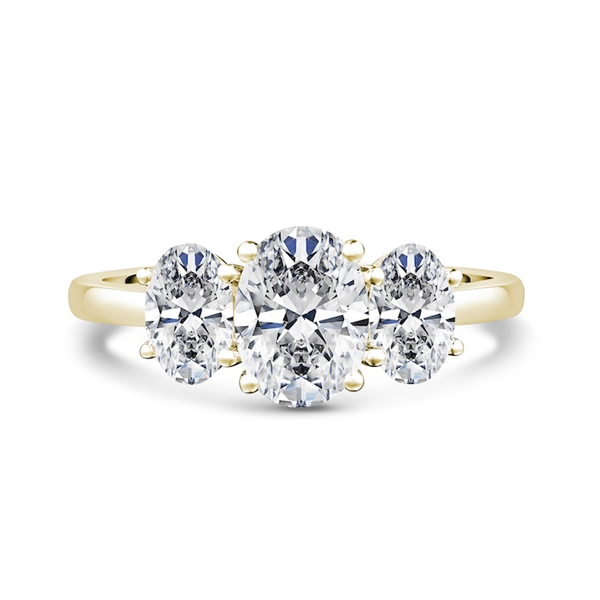
Marquise diamond engagement rings create a long outline with two pointed ends. The shape can give a ring a strong sense of direction, but the proportions and mounting determine whether it feels delicate, dramatic or somewhere between.
Start with the actual dimensions. A long centre can have a substantial footprint even when its weight is similar to a less elongated shape.
Assess symmetry in marquise diamond engagement rings
Look at the stone straight-on. The two tips should align with the overall shape, and the curves on either side should feel balanced. Pay attention to the shoulders rather than concentrating only on length.
GIA's marquise guide discusses these outline considerations. A length-to-width ratio describes proportion, but it does not replace inspection.
Compare fuller and slimmer examples at realistic scale. A preferred silhouette is personal; a narrow ratio should not become a shortcut for judging quality.
Examine the centre pattern
A marquise can show a bow-tie appearance across its middle. Watch the actual diamond as it moves, noting whether the contrast changes or dominates your view.
Ask for ordinary-light images or video where available. Strong jewellery lighting can make almost any stone appear more animated, while an unflattering camera angle can exaggerate darkness. Comparable conditions make the assessment more useful.
Give both tips deliberate protection
The setting needs to account for the two pointed ends. Ask how each tip is protected and how the supporting claws or bezel relate to the stone's dimensions.
Avoid choosing security by appearance alone. Very fine metal may look elegant in an enlarged render, but its construction and condition matter. Equally, heavy-looking claws can alter the silhouette without proving better workmanship.
A professional should assess any feature near a vulnerable point. The report and actual stone need to be considered together.
Balance the band and side stones
A plain band emphasises the long centre. Side stones can create a wider composition, especially in a trilogy. Their dimensions, angles and height should be considered as a pair around the marquise.
A small change in side-stone position can make the ring look broader or more tapered. Review a complete top view rather than separate pictures of the centre and sides.
The trilogy guide explains why total weight alone cannot establish a balanced three-stone ring.
Check comfort and neighbouring rings
Inspect the side profile, overall height and the ends' position during hand movement. Discuss your routine, especially if you frequently wear gloves or work with your hands.
Also check the proposed wedding band. A marquise's length may overhang a straight band, while its basket can create contact that is not obvious from above. The actual pairing determines whether a contour is useful.
Browse Jewel's marquise selection with dimensions and profile in mind.
Common questions
Is a marquise suitable for a solitaire?
Yes. The shape can work as a solitaire or in a multi-stone design when properly mounted.
Will every marquise show the same bow tie?
No. Appearance varies by stone and viewing conditions.
What should I ask before ordering?
For marquise diamond engagement rings, confirm symmetry, tip protection, dimensions and the complete selected specification. Those details matter more than a shape label alone.