
Diamond education
What Is an Eye-Clean Diamond? Understanding Clarity
Learn what an eye-clean diamond means, how clarity differs from everyday appearance and which questions to ask the seller.
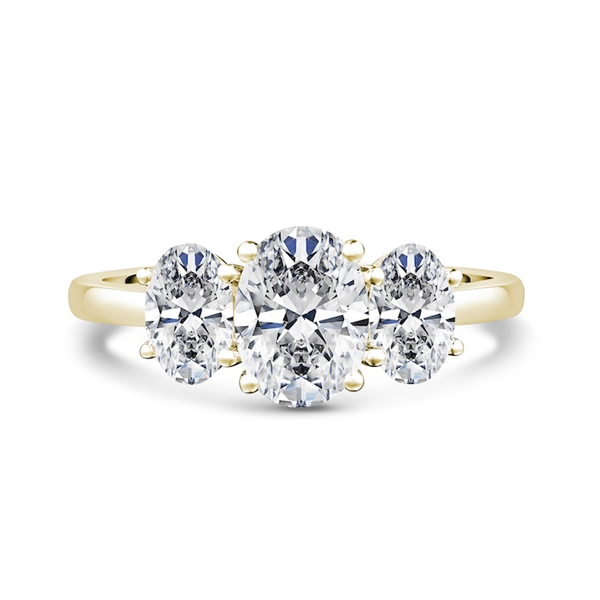
An eye-clean diamond has no inclusions visible to the unaided eye under the viewing conditions being described. It is a practical description, rather than one of the formal clarity grades on a laboratory scale.
Those conditions matter. Viewing distance, lighting, eyesight and whether you look from the top or side can change what you notice. Ask a seller to explain what they mean instead of assuming everyone uses the term identically.
An eye-clean diamond is assessed at normal scale
Magnified photographs are useful for identifying features, but they can make a small inclusion appear dominant. A mark that fills a screen may be difficult to see when the diamond is worn.
Review both enlarged and realistic views. If possible, inspect the actual stone at a normal distance before returning to the magnified image. This keeps the detail in proportion without dismissing anything that needs closer attention.
Clarity grades answer a different question
Laboratories assess clarity using defined examination conditions. Characteristics can include internal inclusions and surface blemishes. Their size, position, number, nature and contrast contribute to the assessment.
GIA's clarity guide explains the formal framework. A grade is valuable evidence, but it is not a guarantee that every stone in that grade looks identical without magnification.
For that reason, avoid promises that a particular grade is always eye-clean. The individual diamond remains the unit of comparison.
Position can matter as much as the label
A dark feature near the centre may attract attention differently from a pale feature near the edge. Facet pattern can also make a characteristic easier or harder to see.
Step-cut diamonds have broad reflections that invite a different kind of inspection from many brilliant cuts. Rather than choosing a fixed clarity grade for every shape, review the actual appearance of the selected stone.
The diamond-shape guide can help you understand why those viewing experiences differ.
Separate visibility from durability
A feature that is difficult to see is not automatically irrelevant to durability. Conversely, a visible inclusion does not automatically mean the diamond is unsuitable.
Ask the jeweller or qualified gemmologist to assess any characteristic that approaches the surface, an exposed point or a vulnerable edge. Do not try to judge structural risk from a tiny report diagram alone.
The setting should protect the stone appropriately. It should not be used to conceal an unresolved question about its condition.
Use a precise buying checklist
Ask whether the diamond is eye-clean from the top at a stated distance, and whether any feature is noticeable from the side. Request actual-stone imagery where available.
Then confirm the laboratory grade, report number and any relevant durability assessment. Finally, compare the difference in price with another diamond that meets your visual preference. The aim is a considered choice, not automatically the highest available clarity.
Common questions
Is eye-clean the same as flawless?
No. A diamond can contain characteristics visible under magnification while appearing clean to the unaided eye.
Can lab-grown diamonds have inclusions?
Yes. Laboratory origin does not guarantee an absence of clarity characteristics.
Should I choose clarity before everything else?
No. An eye-clean diamond still needs attractive proportions, clear documentation and a suitable setting. Review the complete engagement-ring specification before deciding.