
Diamond education
Oval vs Round Diamonds: Comparing Appearance at the Same Carat Weight
Compare oval vs round diamonds at the same weight, including measurements, light patterns, settings and finger coverage.
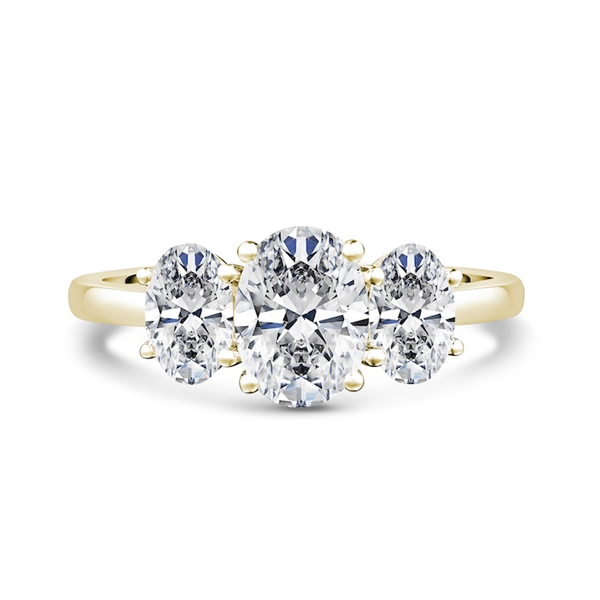
Oval vs round diamonds is a choice between an elongated silhouette and a circular one. At equal carat weight, their proportions can create quite different impressions on the hand.
Rather than asking which always looks bigger, compare the actual dimensions, light pattern and setting. Those details make the decision more useful and more personal.
Oval vs round diamonds: understand the footprint
For a round stone, diameter gives a clear starting point. For an oval, both length and width matter. An oval may extend further along the finger while being narrower across it.
Equal weight does not imply equal visible area, and a longer measurement does not describe the whole appearance. Use the actual millimetres rather than a generic carat chart whenever possible.
The carat guide explains why weight and size should be read together.
Compare the pattern in motion
A round brilliant presents a different arrangement of reflections from an oval. Depending on the individual stone, an oval may show a darker band through the middle. Its visual impact can change as the stone moves.
Round diamonds also vary in quality and appearance. A round outline does not guarantee a pleasing cut. GIA's round-diamond guide provides context for assessing the individual centre.
View stones in similar lighting. Avoid choosing based only on which photograph has the brightest exposure.
Consider symmetry and proportion
With an oval, decide whether you like a fuller or slimmer outline. Inspect the shoulders and ends for a balanced appearance. With a round, consider how the circular centre relates to the band and claws.
If possible, compare settings with similar metal, band width and photographic scale. Otherwise, you may be reacting to the mounting rather than the shape.
Assess the whole ring on the hand
An elongated centre can create a different visual line along the finger. A round can offer a balanced, central footprint. Neither requires a particular hand shape to look good.
Try a realistic outline or comparable sample if available. Photographs on another person's hand are helpful inspiration, but their finger size and the ring's exact dimensions affect the result.
Consider whether you prefer the stone facing along the finger or, where offered, across it. Orientation is a design choice that needs a suitable mounting.
Check profile and future pairing
Either shape can sit in a low or high setting. The basket and shoulders determine practical height and wedding-band clearance. Do not infer those details from the outline.
Review side views and discuss your intended bridal pairing before ordering. A small gap can be a comfortable design choice; a close fit needs enough clearance to avoid unwanted contact.
Explore oval designs and round designs with the same complete-budget limit.
Common questions
Does an oval always cost less?
No fixed rule covers every current quote. Compare origin, specifications, dimensions and the completed ring.
Does a round always sparkle more?
Sparkle depends on the particular stone and conditions. The patterns differ, so assess the appearance you prefer.
What should decide the choice?
Let the oval vs round diamonds comparison guide your preferred silhouette. Then choose the individual stone and setting that deliver that look comfortably.