
Diamond education
Moissanite vs Lab-Grown Diamonds: Appearance, Properties and Price
Compare moissanite vs lab-grown diamonds by material, appearance and documentation, with practical buying questions.
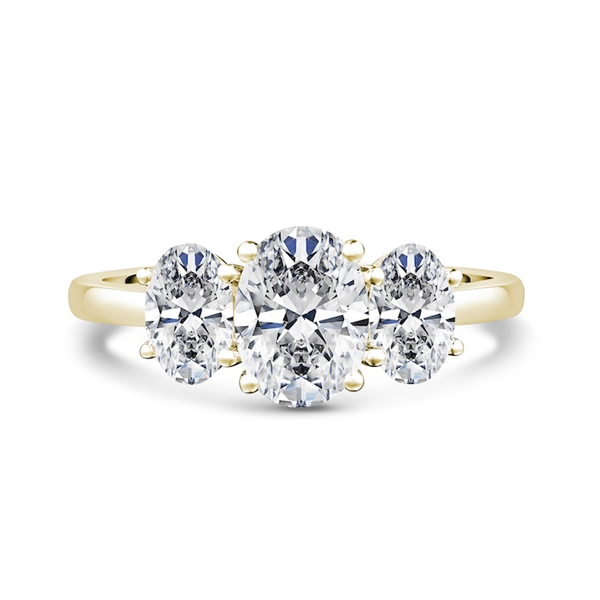
Moissanite vs lab-grown diamonds is a comparison between different materials. A laboratory-grown diamond is diamond. Moissanite is silicon carbide, which can resemble diamond but has different properties.
Both can be used in jewellery. The important point is that a listing should identify the material clearly so you can choose knowingly and compare like with like.
Moissanite vs lab-grown diamonds: material first
“Lab-grown” describes the origin of a diamond, rather than a category containing every manufactured white gemstone. Calling moissanite a lab-grown diamond would therefore be incorrect.
GIA's guide to simulants distinguishes diamond from materials used to imitate its appearance. A phrase such as “diamond look” does not replace an explicit material description.
Read the specification before interpreting the price, photograph or marketing name.
Compare the appearance you enjoy
Moissanite and diamond can both appear lively, but their response to light differs. Compare actual examples under ordinary light as well as brighter lighting. A video showing strong flashes may exaggerate the feature a seller wants to emphasise.
View the stones at normal scale. Large magnified images are helpful for detail, yet the impression on the hand may be quieter. If you have a strong preference about coloured flashes or facet patterns, judge it through direct comparison rather than a general statement that one material “sparkles more”.
Use measurements instead of ambiguous weights
Some alternatives are described using diamond-equivalent weight. That is intended to communicate an approximate diamond-like size; it is not necessarily the material's measured carat weight.
Ask for length and width in millimetres and whether any quoted weight is actual or equivalent. Two listings can appear to offer the same “carat size” while using different conventions.
For the underlying distinction, read the carat guide.
Check the documentation
A diamond report should identify the material and origin within its scope. A card accompanying another gemstone is not automatically equivalent to a diamond grading report.
Look for a clear statement on the invoice and order confirmation. If a seller uses a proprietary name, ask what gemstone that name represents. Avoid relying on a basic tester as the only method of material or origin identification.
Compare finished jewellery, not only stones
The same-looking ring may differ in metal fineness, band dimensions, stone size and setting construction. When comparing prices, record the entire specification and any included services.
This guide does not assign a permanent price ratio to the two materials. Obtain current quotations and compare what you would actually receive. The cheaper offer may be appropriate for your priorities, but it should not be mistaken for the same product.
Common questions
Is moissanite a lab-grown diamond?
No. They are different materials, even when both have been produced in controlled environments.
Can either material be identified from a photograph alone?
A photograph is not a reliable identification method. Use clear documentation and qualified testing when needed.
Which does Jewel use for engagement centres?
Jewel of London's engagement selection uses lab-grown diamonds. Explore the engagement collection with that specification in mind. Understanding moissanite vs lab-grown diamonds helps you compare other offers without confusing a similar appearance with the same material.