
Diamond education
How to Read a Diamond Grading Report
Learn how to read a diamond grading report, verify the report number and check origin, measurements and the document's limits.
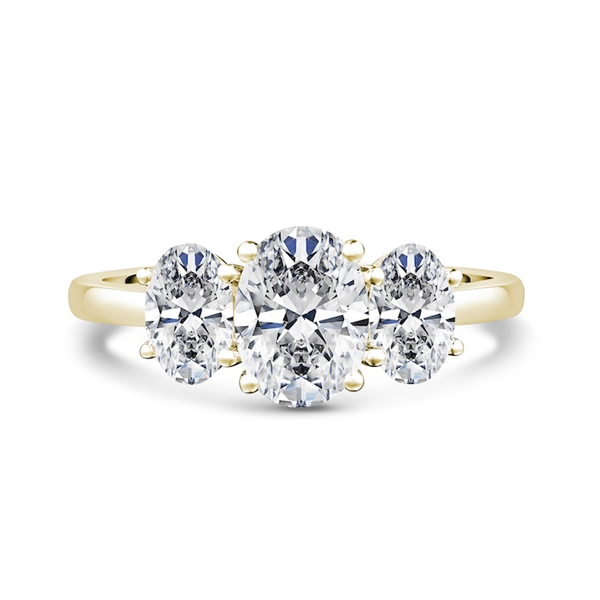
A diamond grading report records characteristics assessed by the issuing laboratory. It helps identify and compare a stone, but it is not a complete judgement of how a finished ring will look or feel.
Start with the report's identity and scope. Then connect its measurements and assessments to the actual diamond.
Identify the diamond grading report first
Check the laboratory name, report number and document type. Establish whether it describes a natural diamond, a laboratory-grown diamond or a different service. Do not assume every document headed “report” contains the same assessment.
Use the issuing laboratory's official service. For example, IGI provides online verification. Match the returned details to your document rather than relying only on a screenshot.
Verification confirms the laboratory's record. Connecting that record to the actual stone still requires appropriate checks, which may include its inscription and physical characteristics.
Read weight and measurements together
Carat weight describes mass. Measurements describe physical dimensions. For an elongated diamond, length and width explain its outline; depth adds further context.
Compare those figures with the appearance you want. A larger weight does not automatically mean a proportionately larger face-up outline. Check that the shape and cutting-style description agree with your selected product.
Understand the quality information shown
Where colour and clarity grades appear, read them within the document's stated system. Review comments and any treatment information. A diagram can help locate clarity characteristics, but not every report includes one.
Cut information needs particular care. Some documents show an overall cut grade for eligible stones; others give polish and symmetry without an equivalent overall grade. Finishing grades do not describe every aspect of visual performance.
Know that formats change
GIA's revised service for D-to-Z laboratory-grown diamonds began in October 2025, using Premium or Standard overall assessments. Its current service page explains the format. Earlier GIA documents can look different.
IGI's laboratory-grown reports provide their own assessment format. Terms from different services are not necessarily one-to-one substitutes. Check the date, service and laboratory before comparing.
Separate the report from the ring specification
The laboratory document may concern a loose centre diamond. It will not necessarily describe the mounting, side-stone selection, band width, ring size or metal hallmark.
Keep a separate order specification for those details. If jewellery contains several stones, ask which have individual reports and how the total carat figure is calculated.
A grading report also differs from a purchase invoice or insurance valuation. Each document serves a different purpose. Ask what is supplied and why.
Make the final visual checks
Use the report to guide questions, then look at the diamond. Check its outline, transparency and pattern under more than one lighting condition where possible. Enlarged video reveals detail, but normal viewing distance remains important.
For a ring, assess the centre in relation to the mounting. Paperwork cannot tell you whether you prefer that combination on the hand.
Common questions
Is a report a guarantee of future price?
No. It records assessed characteristics, not a promised resale result.
Does a hallmark replace a diamond report?
No. Hallmarking concerns precious metal, while a diamond report concerns the stone within its stated scope.
What should I keep after buying?
Keep the diamond grading report, order specification and invoice together. Contact Jewel of London to clarify documentation for a selected piece.