
Diamond education
How to Balance the 4Cs When Comparing Diamond Quotes
Learn how to balance the 4Cs when comparing diamond quotes, using visible appearance, measurements and the complete ring price.
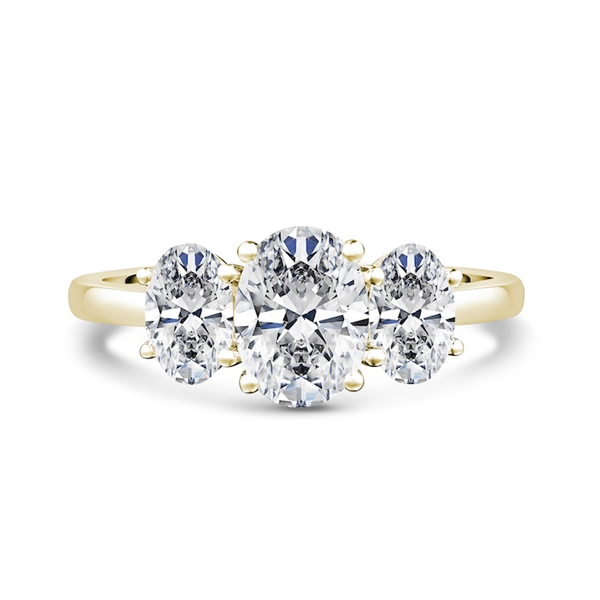
To balance the 4Cs, decide which differences you can actually see and which features matter to your finished ring. Comparing two quotations is easier when you separate documented grades from personal preferences.
Two diamonds with similar report details can still have different proportions and a different appearance in motion. Use the grades to understand the stone, then assess the actual diamond and finished jewellery.
Balance the 4Cs around your priorities
GIA identifies the four quality factors as colour, clarity, cut and carat weight. Each answers a different question:
- Cut: how the diamond has been fashioned and how proportions and finishing influence appearance.
- Colour: the assessed body colour within the grading system used.
- Clarity: the assessed internal and surface characteristics.
- Carat: the diamond's weight, rather than a direct measurement of visible size.
A strong result in one area does not cancel out every consideration in another. A high colour grade, for example, does not describe the symmetry of an outline or the pattern across the stone.
Cut is more than shape
Round, oval and pear describe shapes. Cut quality concerns how a diamond has been proportioned and finished. The terms sometimes overlap in everyday language, so ask exactly what a seller means.
Do not assume every laboratory provides the same overall cut assessment for every shape. Read the report type and scope. For fancy shapes, videos and direct inspection remain valuable because polish and symmetry grades cannot describe the whole face-up appearance.
Colour needs context
The familiar D-to-Z scale describes diamonds within its applicable colour range. It is not a universal scale for fancy-coloured diamonds. Even when a letter grade is supplied, metal, surrounding stones and lighting can influence the appearance when worn.
Compare diamonds under similar conditions. A photograph against a warm background is not a controlled comparison with another taken under cooler light.
Clarity is not the same as visible beauty
Clarity assessment considers characteristics seen under specified examination conditions. Everyday viewing is different. An inclusion's position, contrast and relationship to the facet pattern can matter as much to your eye as the grade label.
Ask what is visible without magnification and whether any feature needs a durability assessment. Avoid assuming every diamond within a particular clarity grade looks identical.
Carat needs measurements beside it
Carat is weight. To understand finger coverage or a pendant's appearance, compare length and width in millimetres as well. Different shapes distribute weight differently, and equal weights can produce different outlines.
For jewellery containing several stones, distinguish individual weight from total carat weight. A 1.00 ct total pair of equal solitaire studs contains two approximately 0.50 ct stones, not two 1.00 ct stones.
Read the right report
Jewel's engagement centres are lab-grown. Report formats vary by laboratory and date. GIA introduced Premium and Standard overall assessments for its revised D-to-Z lab-grown service in October 2025; older reports and other laboratories may use different formats. Check the current GIA service rather than assuming every document is identical.
A practical comparison
Imagine two quotes for oval rings with similar centre weights. One diamond is longer and narrower, while the other has a fuller outline and a higher clarity grade. Start by choosing the outline you prefer, then ask whether either stone has visible inclusions. A higher grade alone cannot answer which ring you will enjoy wearing. Compare the complete setting and metal specification before treating the price difference as a diamond-only premium.
Common questions
Which C matters most?
The answer depends on the stone and your priorities. Judge appearance as a whole rather than by one isolated grade.
Do the 4Cs tell me whether a diamond is natural?
Origin must be identified separately. Check the laboratory document and product description.
Can I compare two rings using the 4Cs alone?
No. You also need the setting, metal, dimensions and complete price. Use the 4Cs of diamonds as a foundation when exploring Jewel's engagement designs.