
Diamond education
Diamond Colour Grades Explained: What Can You See?
Understand diamond colour grades and how lighting, shape and metal affect appearance when comparing individual stones.
Diamond colour grades describe assessed colour within a defined grading system. They are useful for comparison, but they do not tell you exactly how a mounted stone will look in every room or photograph.
A diamond can reflect its surroundings, and small differences may be difficult to judge outside controlled conditions. Use the grade to understand the specification, then assess the appearance you actually prefer.
How diamond colour grades work
The familiar GIA D-to-Z scale begins at D and describes increasing colour within its applicable range. Grading involves controlled lighting and comparison with reference stones. Fancy-coloured diamonds require a different approach.
GIA's colour guide explains the scale and examination conditions. The important buying distinction is between an assessed body colour and the changing reflections you see in normal wear.
A photograph with a yellow reflection does not, by itself, establish a low colour grade. Equally, a bright photograph cannot replace a laboratory assessment.
Compare similar shapes under similar light
Keep the comparison controlled enough to be useful. View stones against a neutral background and, where possible, under the same lighting. Avoid comparing a studio photograph of one stone with a phone image of another.
Shape and facet pattern influence how colour is perceived. A long outline or a broad step-cut facet can present colour differently from a round brilliant. Look at the actual stones instead of transferring a rule from one shape to another.
Consider the metal around the diamond
Yellow and rose gold create a warm setting, while platinum and rhodium-plated white gold create a different surrounding colour. These effects belong to the design; they do not change the diamond's laboratory grade.
Try to see a comparable stone in your preferred metal. A loose diamond on a white tray and a mounted diamond on the hand are different viewing situations. The metal guide helps you consider the overall palette.
Think about neighbouring stones
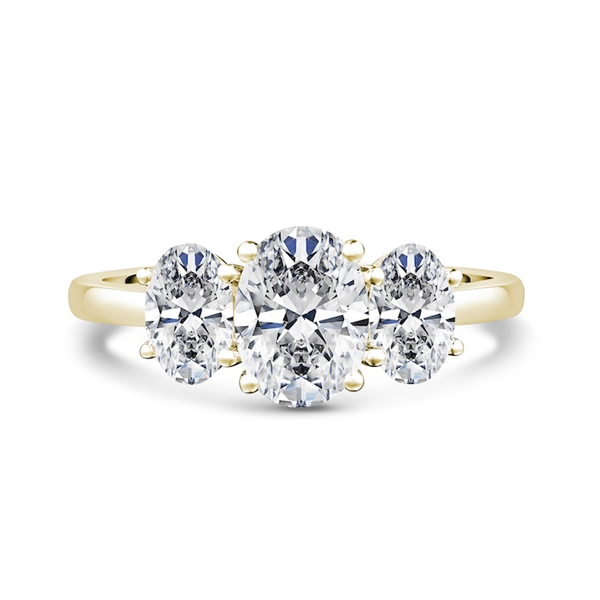
For a trilogy or halo, the centre sits beside other diamonds. A visually harmonious group may matter more than pursuing the highest possible centre grade in isolation.
Ask how the stones will be matched. Matching involves appearance, size and pattern as well as the stated grade. An exact letter match is useful information, but it does not guarantee that all stones will look identical in every light.
Keep report formats in view
Not every current laboratory document uses the same grading presentation. Check the issuing laboratory, stone origin and service. Do not assume a natural-diamond colour scale appears unchanged on every lab-grown assessment.
For Jewel's lab-grown engagement centres, review the specific product details and supplied documentation. If a colour option is named in the selector, make sure the confirmed order records the chosen specification.
Common questions
Do I need the highest colour grade?
That is a preference and budget decision. Compare the visual difference under useful conditions before paying for a distinction you may not notice.
Can yellow gold hide every trace of colour?
No. Metal affects the surrounding reflections, but it does not erase the diamond's body colour or make individual assessment unnecessary.
Are colour grades the same as sparkle grades?
No. Diamond colour grades describe colour; they do not replace assessment of proportions or light performance. Explore engagement designs with colour as one part of the whole ring.