
Sizing and wedding rings
Curved Wedding Bands: Contoured and Wishbone Designs Explained
Compare curved wedding bands, contoured designs and wishbones by shape, depth and clearance beside an engagement ring.
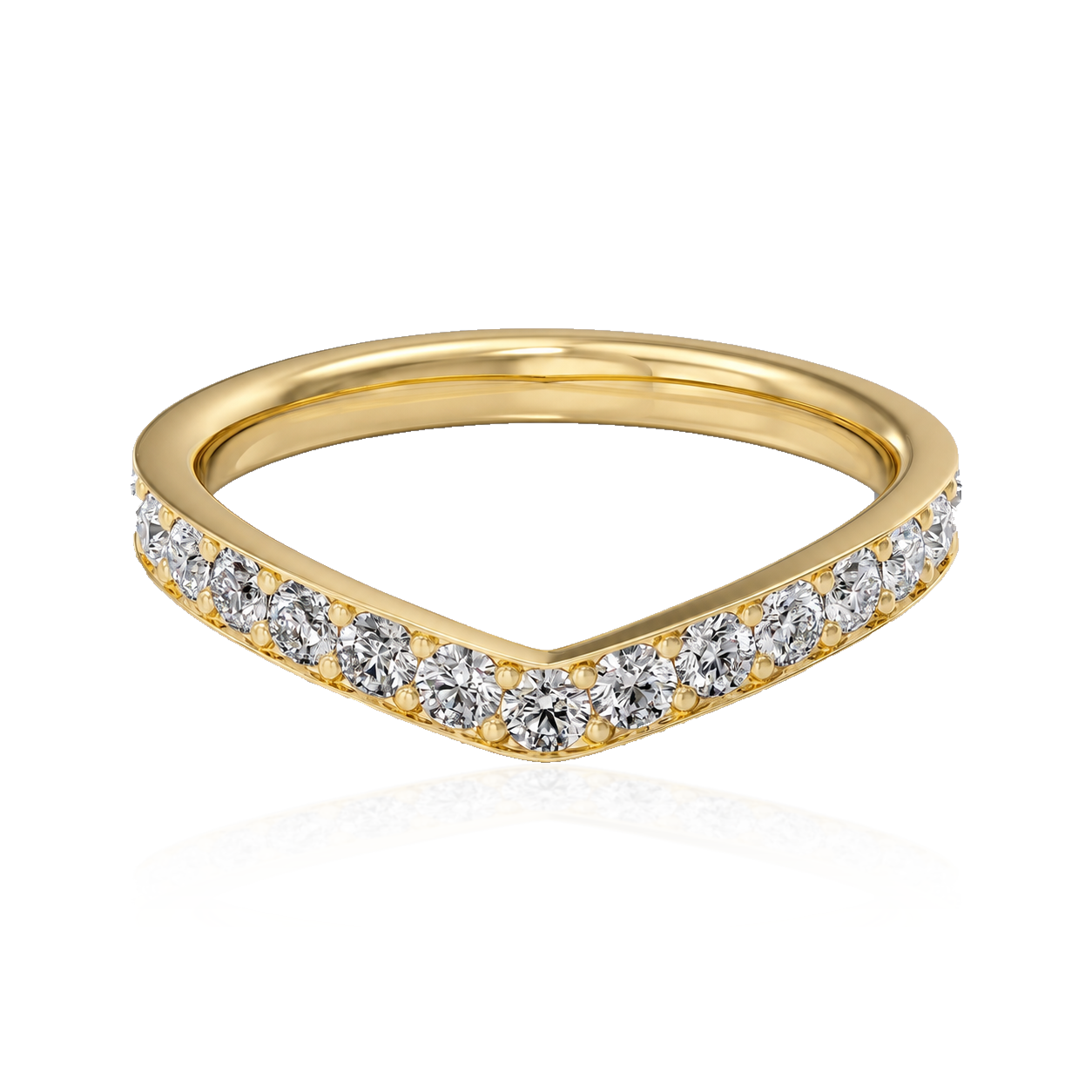
Curved wedding bands create space around an engagement ring rather than maintaining a straight line across the finger. Some use a gentle arc, while others have a deeper contour or a pointed wishbone shape.
Their purpose can be practical, decorative or both. The right design needs to suit the actual engagement ring, not only resemble its outline in a photograph.
Compare curved wedding bands by the shape of the gap
A gentle curve may follow a rounded basket. A more detailed contour may accommodate a particular setting. A wishbone creates an angled opening and a distinctive point.
Look at the contour's depth and width. Two bands described as curved can provide very different amounts of space. A curve that is too shallow may still touch the setting; one that is much deeper can leave a gap you did not expect.
Match the engagement ring's profile
The centre diamond's outline is only part of the problem. The basket, claws and any hidden accent stones also occupy space.
Ask for the rings together from above and from the side. A match at the top can conceal contact lower down. The actual dimensions of both rings matter.
GIA's ring-setting terminology helps distinguish the stone-holding structure from the decorative outline you see first.
Consider how the rings move
A bridal pair will not remain perfectly aligned at every moment. Check whether the shaped band can move comfortably without pushing against a claw or exposing a vulnerable point to pressure.
Finger fit matters too. A ring that rotates excessively may change the relationship between the two designs. Resolve size and profile compatibility together rather than using a deep contour to conceal an unsuitable fit.
Choose plain metal or diamonds deliberately
A plain shaped band makes the outline clear. Diamond-set versions add texture and reflections, but their settings introduce further contact and maintenance considerations.
Compare the band width and height, not only the total diamond weight. A fine pavé line and a broader channel design can behave differently beside the same engagement ring.
See the wedding collection for the available construction and metal options.
View the band on its own
A curved band may be worn without the engagement ring during travel, work or other activities. Decide whether you enjoy that independent silhouette.
A wishbone can create a striking single-ring shape. A deeply fitted contour may feel more specific to its partner. Neither is wrong, but it is worth considering before ordering.
Common questions
Does a pear ring always need a wishbone band?
No. The actual mounting and desired fit determine the best pairing.
Can one curved band fit several engagement rings?
It may, but each pairing should be checked. Similar centre shapes do not guarantee similar baskets.
How do I choose the correct curve?
Compare curved wedding bands using the depth, width and profile of the space they create. Then verify comfort and contact points with the intended engagement ring.