
Sizing and wedding rings
Wedding Band Profiles: Court, D-Shape and Flat Designs
Compare wedding band profiles, including court, D-shape and flat designs, and understand how interior shape affects comfort.
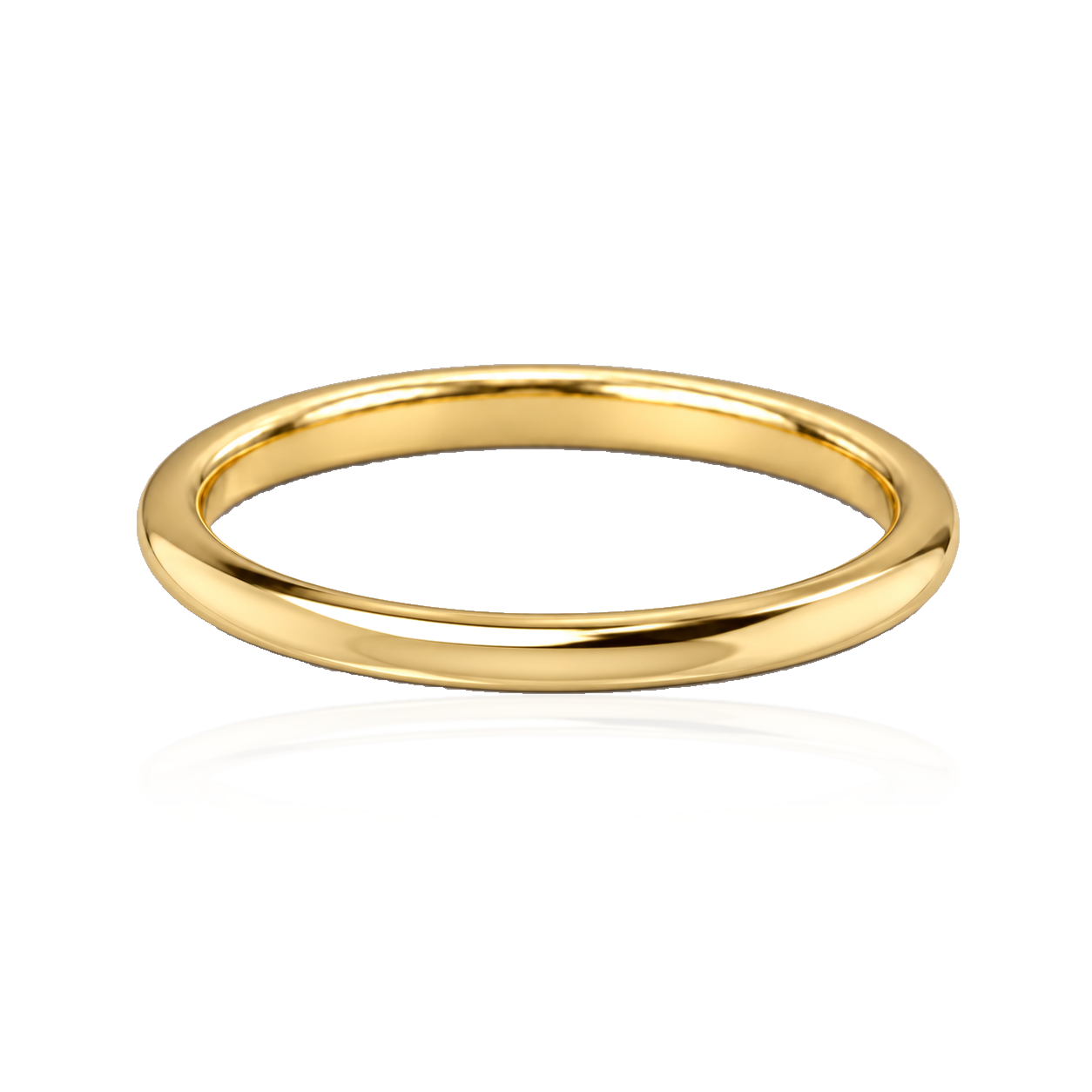
Wedding band profiles describe the ring's cross-section. They explain the shape you would see if you looked through a slice of the band, including the outside surface and the surface against the finger.
This is why two plain bands with the same width can feel different. Profile and depth influence contact, appearance and the way the ring passes over the knuckle.
Compare the common wedding band profiles
A court profile generally has a rounded outside and inside. A D-shape usually has a rounded outside with a flatter inner surface. A flat profile has a flatter outer face, although its interior may be flat or rounded depending on the design.
Product names are not perfectly consistent between sellers. Ask for a cross-section or a clear description of both surfaces rather than relying only on the label.
A “comfort-fit” description commonly relates to the inside shape, but it should still be assessed on your hand.
Look at the outer surface
A rounded top creates a softer highlight and curved silhouette. A flat top gives a different visual line and may feel more geometric. Edge treatment can soften or sharpen that impression.
Finish also matters. A polished flat band and a brushed flat band can look quite different, even with the same dimensions. Compare profile and finish separately so you know which feature you prefer.
Pay attention to the inner surface
The inside profile affects how the band contacts the finger and moves over the knuckle. However, a rounded interior is not an automatic guarantee of comfort for every wearer.
Try an appropriate sample and check the fit over ordinary hand movements. GIA's ring-sizing resource explains why measurement needs to account for construction.
A familiar letter size may not feel identical in a different profile.
Compare depth as well as width
A deep band can feel substantial even when it is relatively narrow. A low-profile band may sit differently between neighbouring fingers.
Ask for dimensions and, where possible, compare designs with similar width. That makes it easier to identify whether your preference comes from profile, depth or the amount of visible metal.
Avoid judging weight from an enlarged image. The metal and complete cross-section both contribute.
Check the bridal pairing
When worn beside an engagement ring, the wedding band's outer shape and height affect clearance. A rounded surface may meet a setting differently from a flat one.
Review the pair in profile. The aim is comfortable spacing and a look you enjoy, rather than matching a product name.
Browse the wedding collection and keep the ring-size guidance alongside the design comparison.
Common questions
Is court the same as comfort fit?
They can be related descriptions, but naming varies. Confirm the inside and outside shape of the specific band.
Does flat mean sharp edges?
No. A flat outer face can have softened edges. Inspect the actual design.
Which profile is best?
There is no universal winner among wedding band profiles. Compare the cross-section, depth and fit on your hand, then choose the appearance and feel you prefer.