
Engagement rings
Bezel vs Claw Settings: Appearance, Security and Maintenance
Compare bezel vs claw settings for visible metal, edge protection, cleaning and maintenance before choosing a ring.
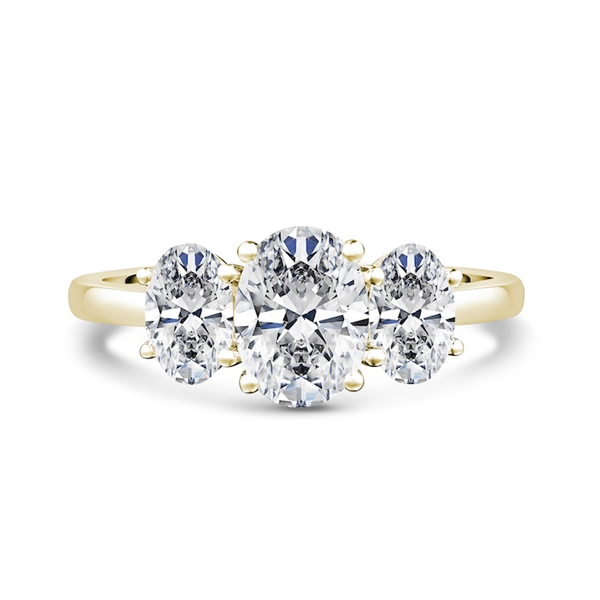
Bezel vs claw settings is a comparison of how metal holds and frames a stone. A bezel uses a rim around all or part of its edge. Claws, also called prongs, hold the stone at selected points.
Each can be elegant and practical. The right choice depends on the shape, construction and appearance you prefer.
Bezel vs claw settings: compare the visible edge
A bezel creates a deliberate metal outline. A full bezel surrounds the perimeter, while partial arrangements leave sections open. Its width and finish influence whether the ring looks fine, graphic or substantial.
Claws interrupt the outline at fewer points and expose more of the stone's edge. Their number, shape and placement all affect the design. GIA's solitaire guide shows how a single-stone ring can use different holding styles.
Compare the ring at normal scale rather than judging only an enlarged image.
Consider the shape's vulnerable areas
Pointed tips and corners need deliberate protection. A bezel may cover those areas, while a claw design may use a specific protective arrangement.
The label alone is not enough. A well-designed mounting must suit the actual stone's dimensions and condition. Ask how the setting protects the shape you have chosen.
Do not assume that more visible metal automatically proves better workmanship or that fewer claws always mean inadequate support.
Assess security through construction
Both styles depend on correct fit and good condition. Claws can wear, bend or catch. A bezel can also suffer damage or lose its appropriate fit.
Choose a ring with a maintenance routine you understand. If a stone moves, a claw catches or the metal looks damaged, stop wearing the piece and arrange inspection. Avoid attempting to tighten it at home.
Think about cleaning access
The underside of the stone can collect residue in either design. An open-looking setting is not necessarily easy to reach, and an enclosed-looking bezel may include a useful opening underneath.
Ask how to clean the exact piece. Use the care guide as a starting point, then follow any design-specific advice. Aggressive brushing and unsuitable cleaning equipment are not substitutes for access.
Judge the light performance in the actual ring
A common assumption is that any bezel must make a diamond dull. That is too broad. The stone's proportions, the mounting and the viewing conditions all contribute to the result.
Compare real examples if possible. Decide whether you enjoy the metal outline and how the diamond looks in ordinary light. Do not let a generic claim override what the specific design shows.
Check the bridal pairing
The basket and surrounding metal determine how a wedding band will sit. A smooth bezel edge does not guarantee a flush fit, just as a claw setting does not guarantee a gap.
Review the pair from the side and confirm that neighbouring metal will not press against vulnerable areas. Explore Jewel's engagement designs with both the outline and profile in mind.
Common questions
Is a bezel maintenance-free?
No. It still needs inspection and appropriate care.
Are four claws always worse than six?
No simple count settles security. Shape, claw dimensions, positioning and workmanship matter.
What should decide the choice?
Use bezel vs claw settings to identify your preferred look, then verify the actual ring's construction, comfort and care requirements.