
Earrings and jewellery
Diamond Tennis Bracelet Buying Guide: Settings, Clasps and Flexibility
Choose a diamond tennis bracelet by comparing length, stone matching, flexibility, clasp security and total carat weight.
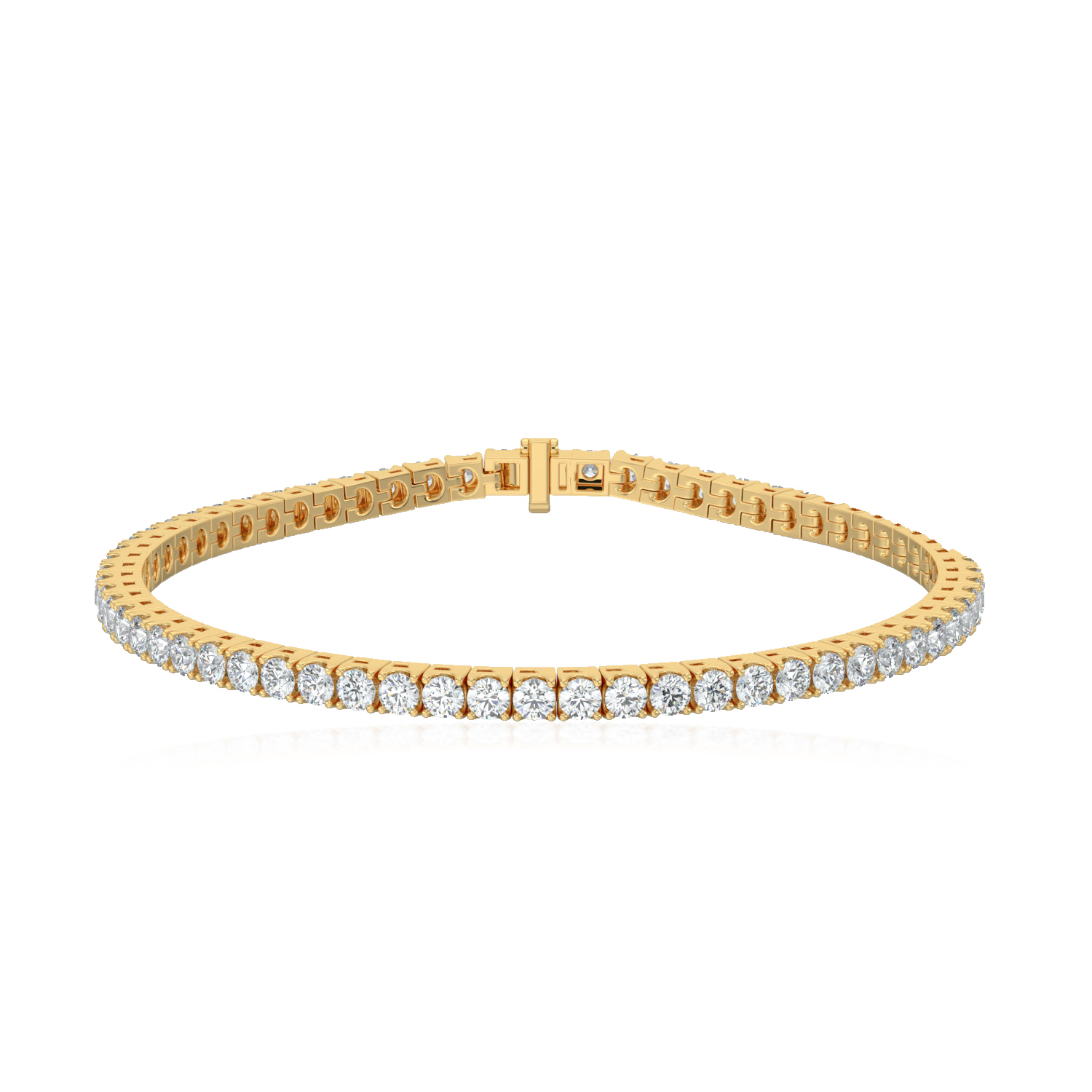
A diamond tennis bracelet links a sequence of stone settings into a flexible line. Its appeal comes from the continuity of the diamonds, but a good purchase decision also considers fit, articulation and the fastening.
Start with the length and visible width you want. Then compare how the complete bracelet moves and closes, rather than judging only its total carat weight.
Compare a diamond tennis bracelet as a complete line
Look for a consistent appearance along the bracelet. Stones should work together in dimensions, colour appearance and general visual character.
Ask how the stated grades describe the group and what documentation applies. Do not assume every small diamond has an individual report or that one report describes every component.
GIA's tennis-bracelet guide discusses the combination of stones and construction. The finished piece matters more than one isolated headline number.
Understand total weight and individual size
Two bracelets with the same total weight can use different stone counts or lengths. A longer bracelet may distribute that total across more settings, changing the individual diamond size.
Record total weight, length and overall width. Ask for stone count or approximate individual dimensions where available.
These details make comparison clearer than assuming that a higher total always produces the look you prefer.
Check flexibility and setting profile
The links should articulate as intended without being forced. A bracelet's drape depends on its construction, and a still photograph cannot fully demonstrate it.
Look at the underside and edges as well as the top. Consider how the settings feel against the wrist and whether the profile suits everyday movement.
Do not bend a bracelet sharply to test it. Ask the jeweller to demonstrate its normal flexibility.
Understand the clasp and any safety catch
Identify the primary clasp and learn how to close it correctly. If a secondary catch is present, understand its role and confirm that it operates properly.
No clasp removes the need for inspection. Stop wearing the bracelet if it opens unexpectedly, feels loose or has a damaged fitting.
Ask about maintenance and the appropriate response after a strong impact or snag.
Choose a comfortable length
The bracelet should have suitable movement without being tight or so loose that it readily catches. The ideal amount of ease depends on its profile, wrist shape and personal preference.
Use the bracelet-fit guide to measure the wrist and discuss the finished length. Do not assume every standard size will suit every wearer.
Compare the full purchase
Confirm origin, metal fineness, selected length, total diamond weight and included documentation. Check whether a length alteration changes the weight or price.
Explore Jewel's bracelets and compare the exact configurations.
Common questions
Is a tennis bracelet suitable for playing tennis?
The name is not a promise of suitability for sport. Remove fine jewellery for activities involving impact, pressure or snagging.
Does a safety catch guarantee against loss?
No. Correct use, condition and inspection still matter.
What should I prioritise?
Choose a diamond tennis bracelet whose fit, consistent appearance, flexibility and fastening all meet your needs, rather than choosing by total weight alone.