
Earrings and jewellery
How to Choose a Diamond Pendant: Shape, Size and Setting
Choose a diamond pendant by comparing shape, measurements, setting and chain compatibility, plus what the price includes.
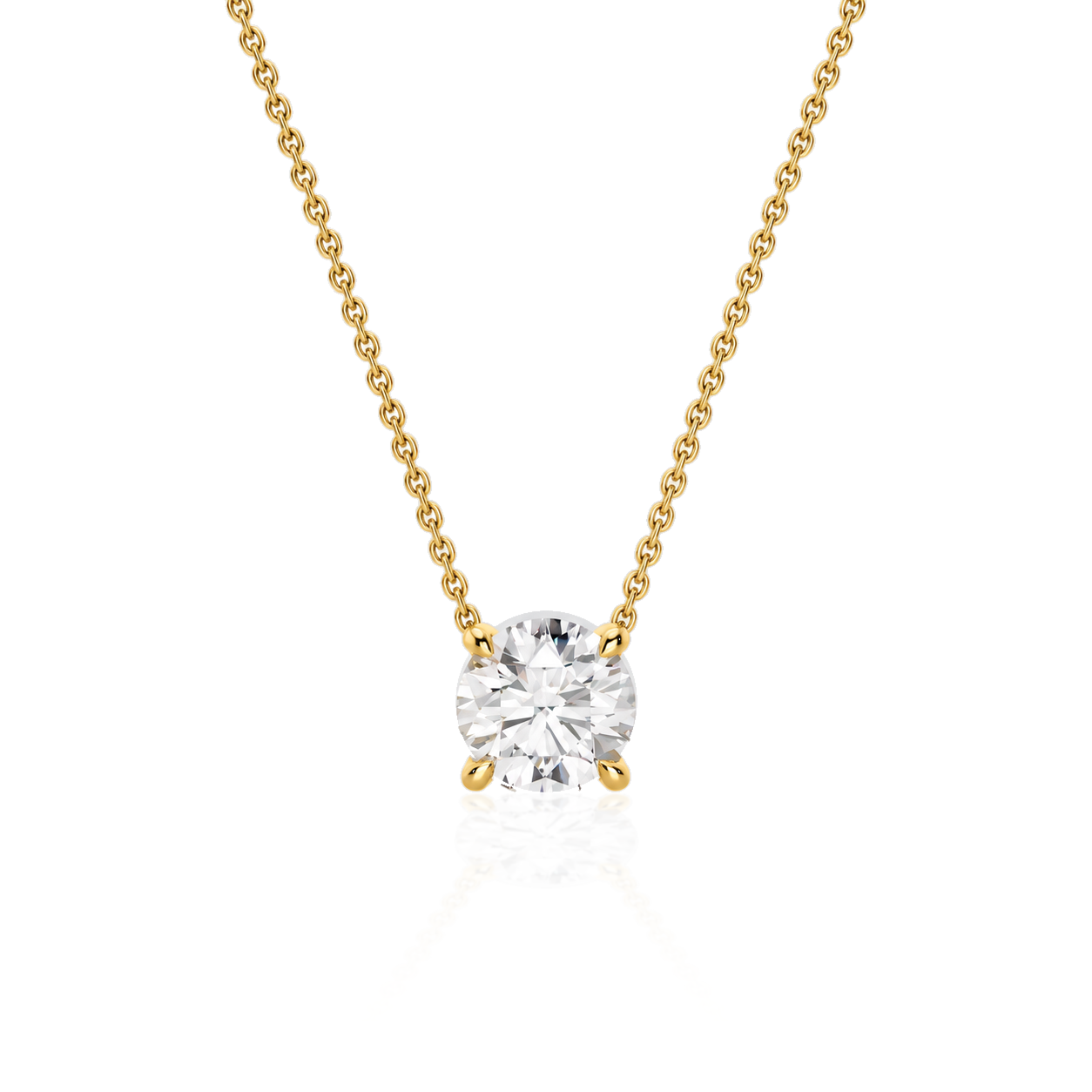
A diamond pendant brings together a stone, a setting and a chain. The centre may attract attention first, but the way those parts work together determines how the piece sits and moves when worn.
Start with the appearance you want at the neckline, then compare the complete specification rather than the diamond weight alone.
Choose a diamond pendant shape you enjoy
Round, oval, pear and rectangular shapes create different lines. A longer outline may sit differently against clothing from a circular one, while orientation can change the design again.
GIA's shape guidance provides context for comparing silhouettes. Use it as a starting point, then look at the actual pendant at realistic scale.
Consider the jewellery already worn nearby. Matching shapes are optional; a clear relationship in scale or metal may be enough.
Compare measurements and weight
Carat tells you the diamond's weight, not the pendant's finished dimensions. Ask for both the stone measurements and the overall setting size.
For a halo or multi-stone pendant, clarify centre weight and total weight. A broad diamond border can create a different footprint from one larger solitaire.
A close-up photograph should not be your only size reference. Compare a measured outline with a pendant you already own if possible.
Inspect the setting and suspension
Look at how the pendant connects to the chain. A separate bail, a concealed passage and fixed side connections can produce different movement and balance.
Review the back and side. Check setting depth, the arrangement of claws or bezel, and whether the piece appears designed to sit comfortably against the body.
No design can promise never to turn during movement. Ask how the particular setting is intended to hang and which chain suits it.
Check whether a chain is included
Some prices cover the pendant only; others include a specified chain. Confirm the chain's metal, fineness, length, width and clasp.
If using an existing chain, check that it can pass through the bail and that the chain and its fittings are appropriate for the pendant's weight. The clasp or end fitting may be wider than the chain itself.
The necklace-length guide can help you decide where you want the piece to sit.
Read the stone specification
Confirm diamond origin, weight and any stated quality details. Ask what report or other documentation accompanies the selected option.
A product render can illustrate shape and metal without showing the individual diamond. Keep that distinction in mind when assessing colour, clarity and appearance.
Common questions
Is a larger diamond always the better pendant?
No. Scale, chain length and setting can matter more to the look you want.
Can I wear it on any chain?
Only after checking compatibility, construction and weight suitability. A matching colour alone is not enough.
What should I confirm before ordering?
For a diamond pendant, record the stone and setting dimensions, chain inclusion and complete price. Explore Jewel's pendants with the full necklace in mind.