
Buying advice
East-West Engagement Rings: What the Horizontal Setting Changes
Explore east-west engagement rings, from horizontal diamond proportions to setting height, finger coverage and the wedding-band details worth checking.
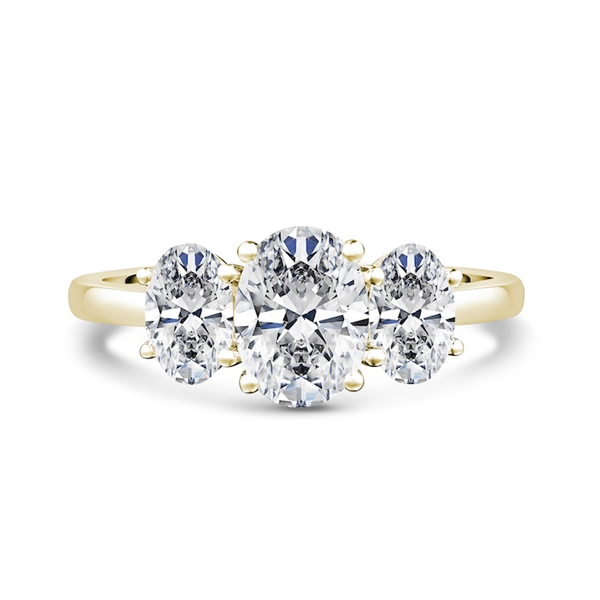
East-west engagement rings place an elongated centre stone across the finger rather than along it. That simple change in orientation can make a familiar diamond shape feel quite different. It is a design choice about line and proportion, rather than a different kind of diamond.
If you like a horizontal setting, begin with the outline you enjoy. Then consider the complete ring on your own hand, including the metal surrounding the stone and the space beside a future wedding band.
What makes east-west engagement rings distinctive?
A rectangular radiant or emerald-shaped stone creates a strong line across the finger. An oval gives a softer horizontal outline, while a marquise brings pointed ends into the composition. Turning a round stone does not create the same visible change.
The idea is established in jewellery design. For example, GIA’s radiant-cut guide includes a diamond set in an east-to-west orientation. The important question is whether you like that composition, rather than whether it is described as a trend.
Judge width on the hand, not just carat weight
Ask for the diamond’s length and width in millimetres. In a horizontal setting, its longer dimension runs across the finger. The surrounding claws or bezel add to the overall footprint, so request the finished setting measurements too.
Compare an image at a realistic scale. An enlarged product photograph is useful for details but cannot tell you how far the ring will extend towards neighbouring fingers. If possible, try a comparable outline and make a loose fist to assess comfort.
Look at the profile and wedding-band space
Horizontal does not automatically mean low-set. The stone still has depth beneath its top surface, and the basket or support has to accommodate it. Request a side view before assuming that a design will sit close to the finger.
Think about the bridal set at the same time. A low centre setting may affect the space for a straight band. You might prefer a small gap or a shaped band, but decide deliberately rather than discovering the fit after ordering.
Questions to take to your jeweller
- What are the overall width and height of the finished setting?
- How are any points or corners protected?
- Can the proposed design be made in my size and chosen metal?
- Which wedding-band shapes have been checked beside it?
- Is the photograph the exact design, or a reference for a proposed variation?
Our engagement collection can help you compare diamond shapes and setting styles. If you are interested in changing a stone’s orientation, contact us to check feasibility, availability and a confirmed quotation before ordering. A design reference is not a promise that every setting can be rotated.
Common questions
Does an east-west setting change the diamond’s cut?
No. It changes the direction in which the stone is mounted. The diamond’s faceting and measurements remain its own characteristics.
Do east-west engagement rings suit every finger?
There is no universal rule. Overall width, neighbouring fingers and personal taste matter more than a prescribed hand shape.
Can I wear a straight wedding band with one?
Sometimes. Ask for the two rings to be assessed together, because the underside of the engagement setting determines the available space.
For another practical comparison, read our ring size guide before confirming the order.