
Diamond education
Diamond Bow-Tie Effect: What to Look for in an Oval or Pear
Understand the diamond bow-tie effect in oval, pear and marquise shapes, and learn how to compare an actual stone in movement and everyday lighting.
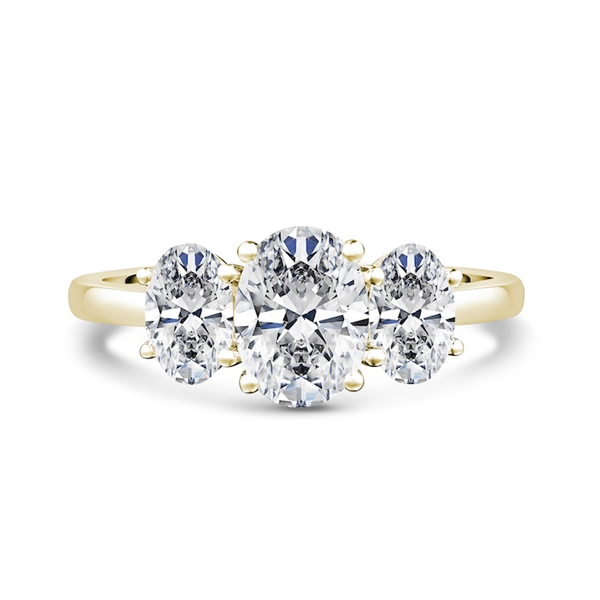
The diamond bow-tie effect is a pattern of contrast that can appear across the centre of an elongated diamond. In some views, it resembles a dark bow tie. It is particularly relevant when comparing oval, pear and marquise shapes, where a single still photograph can leave important questions unanswered.
The aim is not to remove every dark reflection from a diamond. Instead, assess whether the centre looks balanced with the rest of the stone, and whether any dark area remains distracting as the diamond moves.
Understanding the diamond bow-tie effect
The pattern relates to the diamond’s faceting and the way it interacts with light and the viewing environment. It is not simply a mark inside the stone, and it should not be confused with an inclusion described in a clarity assessment.
GIA’s research on oval, pear and marquise diamonds discusses how bright and dark patterns contribute to appearance. Its observations distinguish a broad, dark, persistent pattern from narrower contrast that changes with movement. This is why a still frame needs context.
Ask to see the actual diamond
A setting render helps you understand the ring design. It does not establish the appearance of the individual diamond that will be supplied. Ask which images show the exact stone, and keep its identifying details with your quotation.
For a useful video, request a face-up view with a slow tilt from side to side. Avoid making your decision from a dramatic spin alone. You want time to see the centre, both ends and the changing pattern across the whole surface.
Compare consistently
If you are choosing between two stones, ask for comparable lighting, camera distance and movement. A close camera or different surroundings can change the reflections you see. Keep the viewing conditions as similar as reasonably possible.
GIA’s pear-shaped diamond guide recommends examining stones from different angles and under the lighting in which the ring will be worn. Use that as a prompt for specific questions, rather than asking only whether a diamond has a bow tie.
A practical viewing checklist
- Is the video of the exact diamond in the quotation?
- Does the central area brighten as the stone moves?
- Does the contrast look balanced with the two ends?
- Is the overall outline appealing at normal viewing size?
- Can the jeweller explain what you are seeing without relying on a single frame?
There is no need to choose a stone whose appearance bothers you simply because its other grades look attractive. Equally, a brief dark reflection is not enough on its own to reject a diamond. Compare the whole appearance and your own preference.
Common questions
Is a bow tie the same as poor clarity?
No. The bow-tie effect is an optical appearance pattern. Clarity concerns internal and surface characteristics, so the two should be discussed separately.
Can a grading report replace a video?
No. A report supplies important specifications, but you should also assess the individual stone’s appearance. Ask what the report does and does not evaluate.
Should every oval look the same?
No. Outline, proportions and faceting can give ovals different personalities. Compare examples before deciding which balance you enjoy.
Explore our engagement rings and diamond education guides, then ask us to clarify the media and specifications for your preferred configuration.