
Complimentary insured UK delivery
Jewel of London

Diamond education

Why Diamonds Look Different in Different Lighting

Learn why diamonds in different lighting can look bright, fiery or more subdued, and how to make a fair comparison before choosing your jewellery.
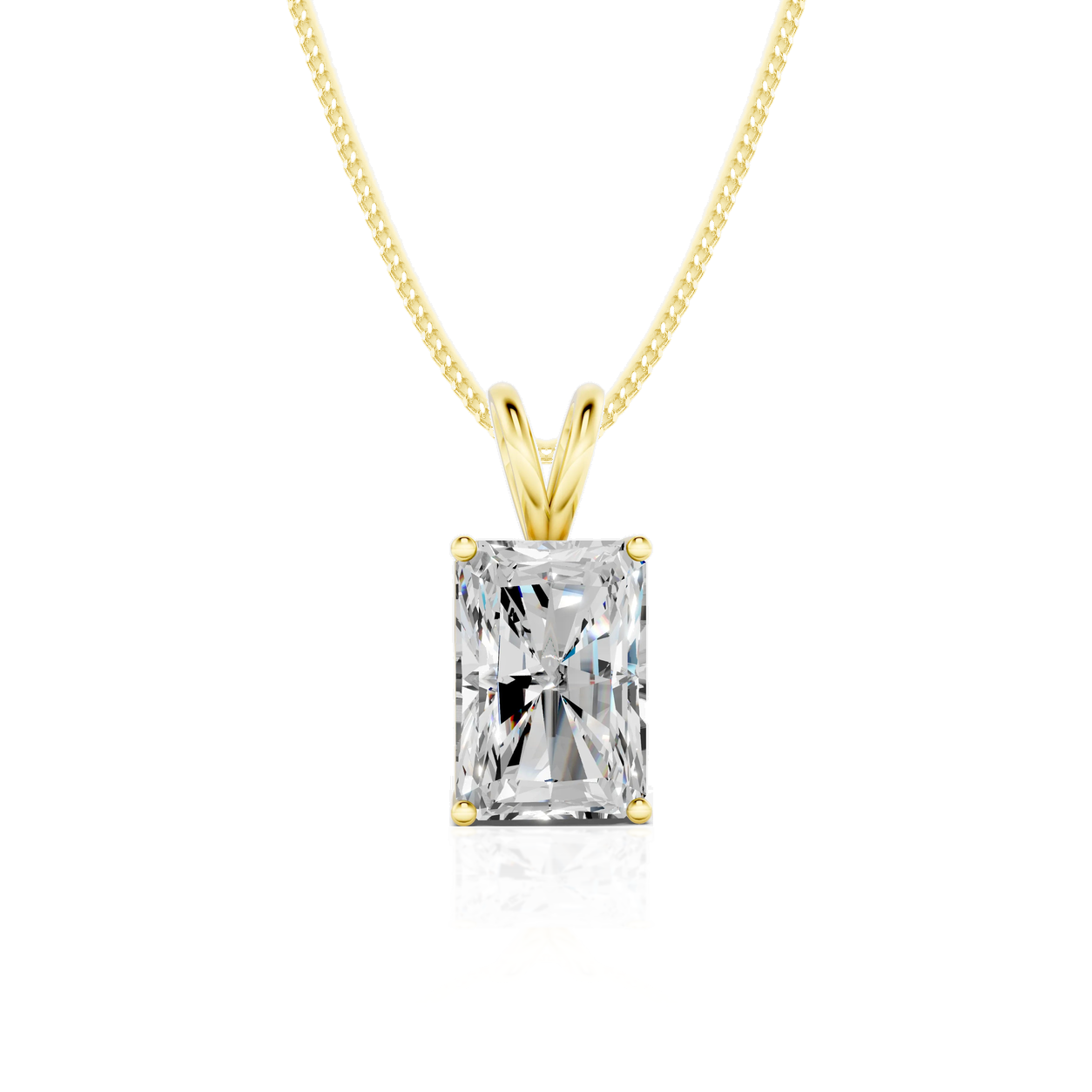
Radiant diamond solitaire pendant on a yellow gold chain

Viewing diamonds in different lighting can be surprising. A stone that gives sharp flashes beneath a spotlight may look softer beside a window. That change is a reason to compare carefully, rather than expecting one photograph to represent every moment of wear.

When you shop for diamond jewellery, consider the places where you will actually wear it. An office, an evening restaurant and an outdoor setting do not provide the same light or surroundings.

Why diamonds in different lighting change appearance

A diamond’s appearance includes brightness, coloured flashes known as fire, and the pattern of sparkle as it or the viewer moves. Different lighting conditions reveal these features differently. The surrounding environment also contributes reflections.

GIA’s explanation of light and diamond appearance recommends looking at a diamond in the conditions where you will normally wear it. A laboratory assessment and an everyday viewing experience answer different questions; both can be useful.

Use more than one viewing situation

Ask for a calm view in diffuse light as well as one that shows sparkle under smaller light sources. You do not need a special lighting kit. The purpose is to avoid choosing entirely from an unusually dramatic presentation.

GIA’s guide to assessing diamond sparkle discusses examining diamonds under different lighting arrangements. When comparing two options, keep the conditions consistent so that you are judging the stones rather than two different filming setups.

Read photographs and videos carefully

Check whether the image shows a design render, a sample ring or the exact diamond. Those are all useful forms of information, but they are not interchangeable. A render can show the shape of the claws and band without demonstrating the individual stone’s optical appearance.

Screen brightness, camera exposure and magnification can also affect your impression. Avoid comparing a brightly edited close-up on one website with a dim handheld video on another and treating the difference as a reliable quality ranking.

Request a short, slow video that includes a steady face-up view. Then view it at a normal scale, not only with the diamond filling the screen. Keep a note of the dimensions so that visual impact and physical size remain separate questions.

Separate appearance from specification

Ask for the diamond’s documented specifications alongside the imagery. If two stones have similar listed grades but look different to you, ask the jeweller to explain the visible differences. Do not assume one appealing clip tells the complete story.

Our carat guide explains another important distinction: weight does not tell you the whole story about dimensions. Use measurements, documentation and appearance together when considering a piece.

Common questions

Should my diamond sparkle in a dark room?

A diamond needs available light to create the reflections and flashes you see. It does not produce its own illumination.

Is a less sparkly photograph evidence of a worse diamond?

Not by itself. Ask about the lighting, whether the image shows the actual stone and how it compares in consistent conditions.

Which view should I request before buying?

Ask for realistic face-up imagery and a slow video of the actual diamond, with enough information about the lighting to interpret it.

Browse our diamond pendants or engagement rings, and contact us if you need help distinguishing design imagery from individual diamond information.
Diamond education

Diamond Bow-Tie Effect: What to Look for in an Oval or Pear

Understand the diamond bow-tie effect in oval, pear and marquise shapes, and learn how to compare an actual stone in movement and everyday lighting.

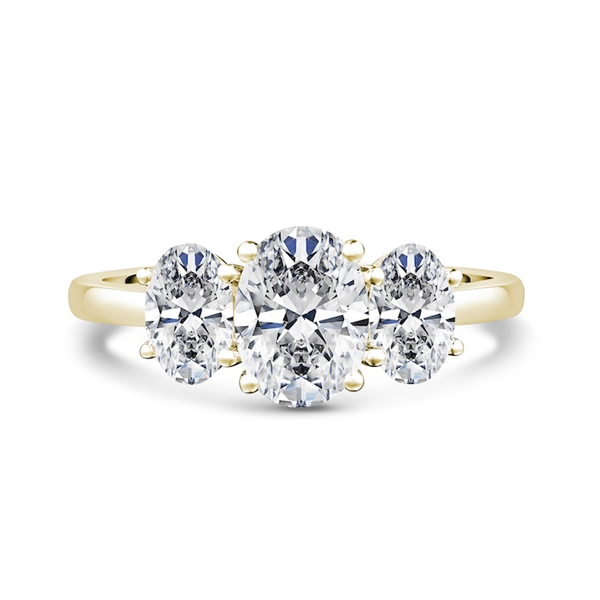
Oval trilogy engagement ring in yellow gold

The diamond bow-tie effect is a pattern of contrast that can appear across the centre of an elongated diamond. In some views, it resembles a dark bow tie. It is particularly relevant when comparing oval, pear and marquise shapes, where a single still photograph can leave important questions unanswered.

The aim is not to remove every dark reflection from a diamond. Instead, assess whether the centre looks balanced with the rest of the stone, and whether any dark area remains distracting as the diamond moves.

Understanding the diamond bow-tie effect

The pattern relates to the diamond’s faceting and the way it interacts with light and the viewing environment. It is not simply a mark inside the stone, and it should not be confused with an inclusion described in a clarity assessment.

GIA’s research on oval, pear and marquise diamonds discusses how bright and dark patterns contribute to appearance. Its observations distinguish a broad, dark, persistent pattern from narrower contrast that changes with movement. This is why a still frame needs context.

Ask to see the actual diamond

A setting render helps you understand the ring design. It does not establish the appearance of the individual diamond that will be supplied. Ask which images show the exact stone, and keep its identifying details with your quotation.

For a useful video, request a face-up view with a slow tilt from side to side. Avoid making your decision from a dramatic spin alone. You want time to see the centre, both ends and the changing pattern across the whole surface.

Compare consistently

If you are choosing between two stones, ask for comparable lighting, camera distance and movement. A close camera or different surroundings can change the reflections you see. Keep the viewing conditions as similar as reasonably possible.

GIA’s pear-shaped diamond guide recommends examining stones from different angles and under the lighting in which the ring will be worn. Use that as a prompt for specific questions, rather than asking only whether a diamond has a bow tie.

A practical viewing checklist

  • Is the video of the exact diamond in the quotation?
  • Does the central area brighten as the stone moves?
  • Does the contrast look balanced with the two ends?
  • Is the overall outline appealing at normal viewing size?
  • Can the jeweller explain what you are seeing without relying on a single frame?

There is no need to choose a stone whose appearance bothers you simply because its other grades look attractive. Equally, a brief dark reflection is not enough on its own to reject a diamond. Compare the whole appearance and your own preference.

Common questions

Is a bow tie the same as poor clarity?

No. The bow-tie effect is an optical appearance pattern. Clarity concerns internal and surface characteristics, so the two should be discussed separately.

Can a grading report replace a video?

No. A report supplies important specifications, but you should also assess the individual stone’s appearance. Ask what the report does and does not evaluate.

Should every oval look the same?

No. Outline, proportions and faceting can give ovals different personalities. Compare examples before deciding which balance you enjoy.

Explore our engagement rings and diamond education guides, then ask us to clarify the media and specifications for your preferred configuration.

Buying advice

East-West Engagement Rings: What the Horizontal Setting Changes

Explore east-west engagement rings, from horizontal diamond proportions to setting height, finger coverage and the wedding-band details worth checking.

Oval trilogy engagement ring in yellow gold

East-west engagement rings place an elongated centre stone across the finger rather than along it. That simple change in orientation can make a familiar diamond shape feel quite different. It is a design choice about line and proportion, rather than a different kind of diamond.

If you like a horizontal setting, begin with the outline you enjoy. Then consider the complete ring on your own hand, including the metal surrounding the stone and the space beside a future wedding band.

What makes east-west engagement rings distinctive?

A rectangular radiant or emerald-shaped stone creates a strong line across the finger. An oval gives a softer horizontal outline, while a marquise brings pointed ends into the composition. Turning a round stone does not create the same visible change.

The idea is established in jewellery design. For example, GIA’s radiant-cut guide includes a diamond set in an east-to-west orientation. The important question is whether you like that composition, rather than whether it is described as a trend.

Judge width on the hand, not just carat weight

Ask for the diamond’s length and width in millimetres. In a horizontal setting, its longer dimension runs across the finger. The surrounding claws or bezel add to the overall footprint, so request the finished setting measurements too.

Compare an image at a realistic scale. An enlarged product photograph is useful for details but cannot tell you how far the ring will extend towards neighbouring fingers. If possible, try a comparable outline and make a loose fist to assess comfort.

Look at the profile and wedding-band space

Horizontal does not automatically mean low-set. The stone still has depth beneath its top surface, and the basket or support has to accommodate it. Request a side view before assuming that a design will sit close to the finger.

Think about the bridal set at the same time. A low centre setting may affect the space for a straight band. You might prefer a small gap or a shaped band, but decide deliberately rather than discovering the fit after ordering.

Questions to take to your jeweller

  • What are the overall width and height of the finished setting?
  • How are any points or corners protected?
  • Can the proposed design be made in my size and chosen metal?
  • Which wedding-band shapes have been checked beside it?
  • Is the photograph the exact design, or a reference for a proposed variation?

Our engagement collection can help you compare diamond shapes and setting styles. If you are interested in changing a stone’s orientation, contact us to check feasibility, availability and a confirmed quotation before ordering. A design reference is not a promise that every setting can be rotated.

Common questions

Does an east-west setting change the diamond’s cut?

No. It changes the direction in which the stone is mounted. The diamond’s faceting and measurements remain its own characteristics.

Do east-west engagement rings suit every finger?

There is no universal rule. Overall width, neighbouring fingers and personal taste matter more than a prescribed hand shape.

Can I wear a straight wedding band with one?

Sometimes. Ask for the two rings to be assessed together, because the underside of the engagement setting determines the available space.

For another practical comparison, read our ring size guide before confirming the order.

Buying advice

Four-Claw vs Six-Claw Rings: How to Choose Your Setting

Compare four-claw vs six-claw rings, including diamond visibility, security and practical details to check before choosing an engagement ring setting.

Oval trilogy engagement ring in yellow gold

When comparing four-claw vs six-claw rings, look beyond the number of metal tips around the diamond. Both designs can create a beautiful engagement ring. The right choice depends on the stone, the proportions of the setting and how the finished ring feels on your hand.

This comparison is most useful for round centre diamonds. Other shapes need a setting designed around their own outline, so do not assume every stone should use the same arrangement.

How four-claw vs six-claw rings look

Four claws leave more of a round diamond’s outline visible between the holding points. Depending on their position and size, they can also give the overall setting a slightly squarer appearance. Six claws interrupt the outline in more places, often emphasising its roundness.

That difference becomes clearer when you compare rings at the same scale. A close-up photograph can make a delicate claw look substantial. Ask to see a normal viewing distance as well as a detailed image, and compare a similar diamond diameter in each setting.

What the number of claws means for security

GIA explains that six claws can offer additional protection and a better chance of retaining the diamond if one claw is damaged. However, a larger number is not a guarantee against loss. The fit, condition and construction of the complete setting still matter.

GIA also cautions against choosing four claws on the assumption that they automatically create more sparkle. Diamond cut, rather than claw count, is the deciding factor in that claim. Read GIA’s comparison of four and six prongs for the technical background.

Compare the details you will notice every day

Ask for a side view. Notice the height above the finger, the shape beneath the stone and the space available beside a wedding band. A top view alone cannot answer those questions.

Then look at the tips themselves. Fine pointed claws and softly rounded claws give a different finish, even when the number is identical. Choose the effect you enjoy, while asking the jeweller whether the proposed proportions suit the particular stone.

  • Compare the same diamond shape and similar measurements.
  • Request the band width and overall setting height.
  • Ask how a wedding band will sit beside it.
  • Check the aftercare and inspection advice for the finished ring.

Make the decision with the whole ring in mind

Browse our engagement rings and save two or three designs whose profiles you like. Your shortlist will be more useful than a general rule that one claw arrangement is always better.

If a ring starts catching on fabric or a stone seems to move, stop wearing it and arrange an inspection. Do not press a claw back yourself. Our jewellery care guide is a useful starting point for everyday handling.

Common questions

Are six claws always the best choice?

No. They offer useful advantages, but the stone’s shape, setting design and workmanship must be considered together.

Will four claws make a diamond look bigger?

They can change how much of the outline you see. They do not change the diamond’s measurements, so compare the actual millimetre dimensions and a realistic view.

Can I change the claw arrangement later?

Ask the jeweller to assess the ring. A different arrangement may require a new head or a more substantial remake, rather than a small adjustment.

Your bag

Enjoy 10% off
Join our newsletter and enjoy 10% off full-price jewellery.
    Get my 10% code
    Email me new collections and offers.
    Unsubscribe anytime. Privacy
    No thanks, I’ll keep browsing